
American Oversight and Historians Sue to Block Trump’s Effort to Evade Presidential Records Law
Our lawsuit comes just days after Trump’s DOJ advanced a sweeping effort to block access to hundreds of millions of documents from current and past administrations.
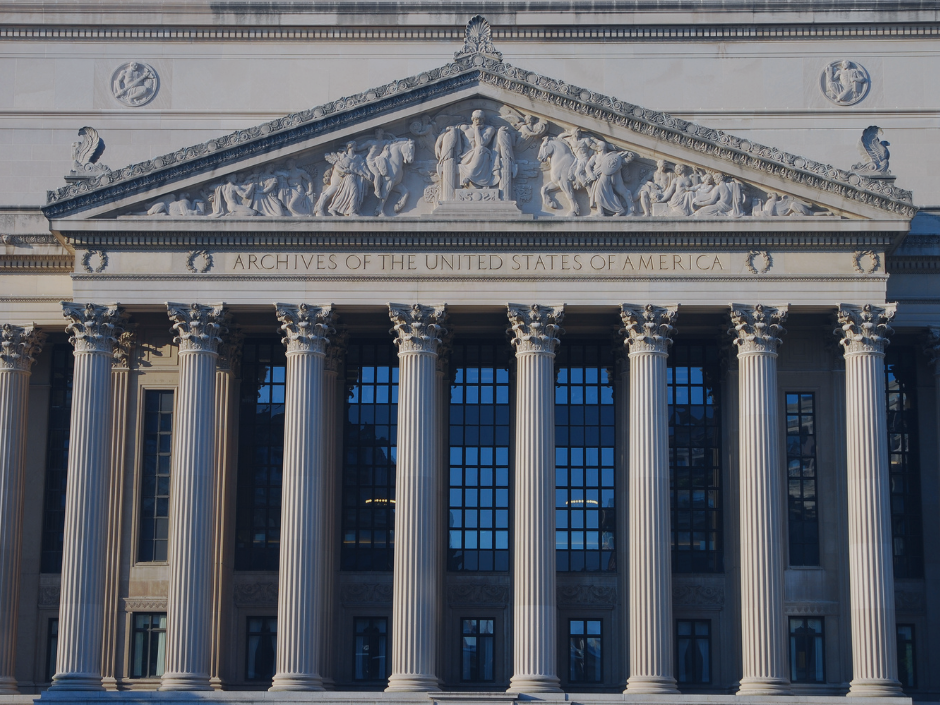
American Oversight and the American Historical Association have filed suit challenging a sweeping memorandum from the Department of Justice’s Office of Legal Counsel (OLC) that declared the Presidential Records Act (PRA) is unconstitutional and that President Donald Trump “need not further comply” with its requirements, effectively encouraging the president to violate federal law. The lawsuit argues that the memo relies on virtually no judicial authority and defies binding Supreme Court precedent outright, representing a radical attempt to nullify a law that has governed presidential records for nearly half a century.
The memo reflects a broader push to concentrate power in the presidency, at the expense of the public’s right to know. If allowed to stand, the administration’s position could have sweeping consequences far beyond President Trump’s own records, threatening to upend decades of established law governing presidential transparency. Legal experts and historians warn that applying the opinion could block public access to hundreds of millions of records — including more than 700 million White House emails — and disrupt the established process for releasing records from prior administrations.
“Since Watergate, Congress has made clear that presidential records belong to the American people — not to any one president,” said Chioma Chukwu, Executive Director of American Oversight. “The DOJ is now pushing a sweeping view of presidential power that would hand control of those records to the White House — a position the Supreme Court has already rejected. The White House does not get to decide what is preserved, what is hidden, or what is destroyed. The law sets an independent process, followed by every administration for nearly half a century, to safeguard public access. If that framework is cast aside, it puts critical records at risk of being controlled, concealed, or even destroyed before the public ever has a chance to see them.”
“Since its founding in 1884, the American Historical Association has advocated for the preservation of federal records,” said Dr. Sarah Weicksel, the Association’s executive director. “The AHA’s 1910 argument in support of establishing a National Archives remains true in this current fight for preservation: these records are ‘materials which historians must use in order to ascertain the truth.’ Presidential records are essential for transparency and accountability in our democracy; they are also essential sources for researching and understanding the American past. Those records and the history they tell belong not to any individual, but to the American people.”
The PRA was enacted in 1978 in the wake of the Watergate scandal to ensure the preservation and public accessibility of presidential records. It established that presidential records are the property of the American people, not the president. In upholding a prior law governing President Richard Nixon’s records, the Supreme Court rejected claims that such requirements violate separation of powers, affirming Congress’s authority to regulate the preservation and disclosure of presidential materials.
Since then, no presidential administration — including Trump’s administration in his first term — has questioned the law’s constitutionality. As recently as last year, the Trump administration itself acknowledged in litigation that White House agencies and offices are subject to the PRA and must comply with its requirements, underscoring the abrupt and self-serving nature of its current reversal.
The lawsuit also raises urgent concerns about the administration’s current recordkeeping practices in the wake of the OLC memo. Because OLC memos are typically treated as binding across the executive branch, there is a serious risk that the National Archives and other officials will halt compliance with the PRA altogether. The White House has provided no assurances — and under its new policy may not even attempt — to comply with longstanding requirements to preserve presidential records, including restrictions on the use of personal email, text messaging, or encrypted applications for official business. Without those safeguards, records documenting key decisions and actions could be lost, deleted, or never preserved at all.
Among these records are those now eligible for public access under the PRA’s five year provision, and for which we filed a sweeping set of Freedom of Information Act requests seeking records that could provide additional details on corruption, conflicts of interest, and abuses of power during Trump’s first term — one of the most opaque and controversial presidencies in modern history.
In our complaint, we, along with the American Historical Association, ask the court to declare the PRA constitutional, block the administration from relying on the OLC memo, and compel compliance with federal law — including the preservation of presidential records and the timely release of those records to the public. The case underscores a fundamental principle: presidential records belong to the American people, and no president has the sole authority to control or conceal them.