

American Oversight v. DOJ — Records Concerning Weaponization Working Group Director and U.S. Pardon Attorney Ed Martin
Dec 03, 2025
Our amended complaint seeks records on Ed Martin, director of the Trump administration’s Weaponization Working Group.
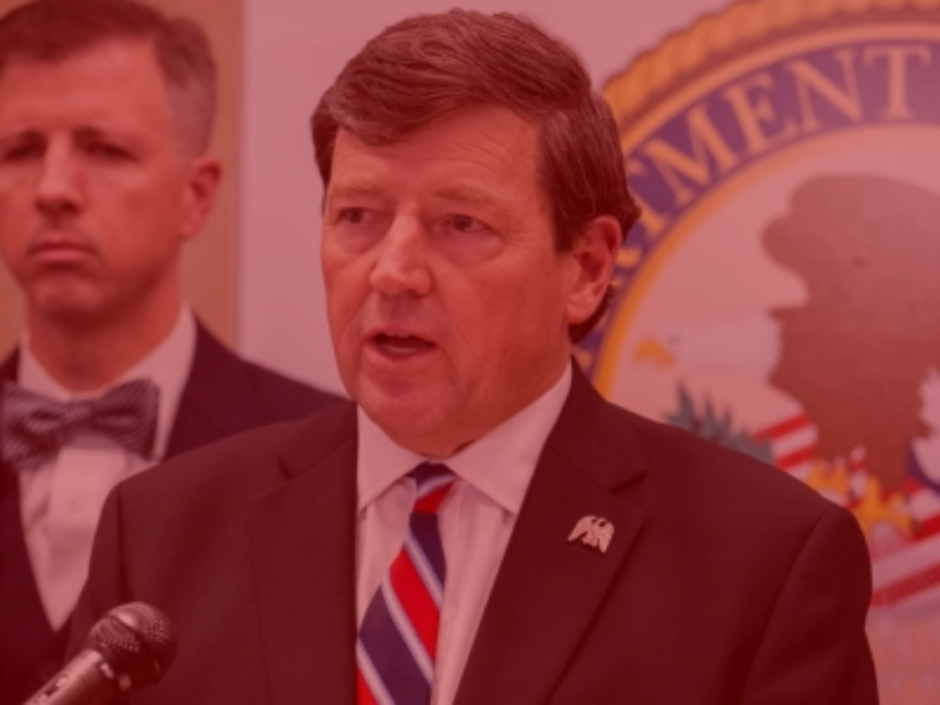
Wednesday, American Oversight expanded its lawsuit against the U.S. Department of Justice (DOJ), targeting the department’s continued refusal to expedite and produce records concerning Edward “Ed” Martin, who has emerged as a central figure in the Trump administration’s effort to use federal law enforcement against perceived political enemies.
The amended complaint details DOJ’s ongoing failure to respond to our Freedom of Information Act (FOIA) requests seeking records involving Martin, despite credible allegations that he used personal devices and autodeleting messaging applications to conduct official business. Weeks after we first went to court, the DOJ still has not granted expedited processing, produced records, or shown that it has taken adequate steps to preserve materials central to understanding Martin’s role in directing the department’s Weaponization Working Group.
“When senior Justice Department officials who openly acknowledge carrying out the president’s personal agenda in directing retaliatory criminal probes face credible allegations of record destruction, transparency becomes more essential than ever to the rule of law,” said Chioma Chukwu, Executive Director of American Oversight. “The public has a right to know how Ed Martin is wielding power at the DOJ to advance Trump’s political retribution campaign.”
Last month, we sued the DOJ after the agency denied or failed to act on multiple requests for expedited processing amid credible allegations that Martin concealed or destroyed official communications. Today’s amended complaint details how, weeks later, the DOJ still has not issued final determinations on most of those requests and has produced no records. The filing further highlights the DOJ’s failure to conduct adequate searches and its ongoing withholding of non-exempt records.
The National Archives and Records Administration (NARA) opened an investigation into Martin’s potential use of personal devices and autodeleting messaging applications like Signal after American Oversight sent a letter to NARA Acting Archivist Marco Rubio and Attorney General Pam Bondi demanding urgent action to recover any missing records and prevent further destruction. This followed Rep. Jamie Raskin’s revelation last fall of credible allegations that Martin used such devices and platforms to conceal communications related to the Weaponization Working Group — conduct that, if true, would violate federal records laws and obstruct public oversight.
Last year, Martin oversaw a sweeping purge of the D.C. U.S. Attorney’s Office, demoting top career prosecutors who handled cases against Trump’s closest advisers and Jan. 6 conspirators. He previously cast himself — and other federal prosecutors — as the president’s personal lawyer, abandoning the role of independent officers sworn to uphold the Constitution. After a brief stint as interim U.S. Attorney for Washington, D.C., in early 2025 — a role for which he ultimately failed to secure Senate confirmation — Martin moved to the DOJ headquarters and assumed several senior positions, including director of the department’s newly-created Weaponization Working Group.
Launched in February, the Weaponization Working Group was tasked with reviewing the conduct of federal agencies over the prior four years to identify actions it claimed may have been driven by political or otherwise improper motives rather than legitimate law enforcement objectives. In practice, the Working Group quickly undertook investigations targeting figures who had previously held Trump and his allies to account, including former FBI Director Comey; New York Attorney General James, who secured a major mortgage fraud judgment against the Trump Organization; and Senator Adam Schiff, a key member of the House committee that investigated Trump’s role in the January 6 insurrection.
These failures come as the department faces growing scrutiny over politically charged investigations, including the high-profile probe of Federal Reserve Chair Jerome Powell, intensifying concerns about politicization and internal breakdowns at the DOJ.