
American Oversight Seeks Trump 1.0 Records on First Day They Become Publicly Available Under Law
The Freedom of Information Act requests follow our call for Todd Blanche to step aside from any role overseeing release of Trump records.
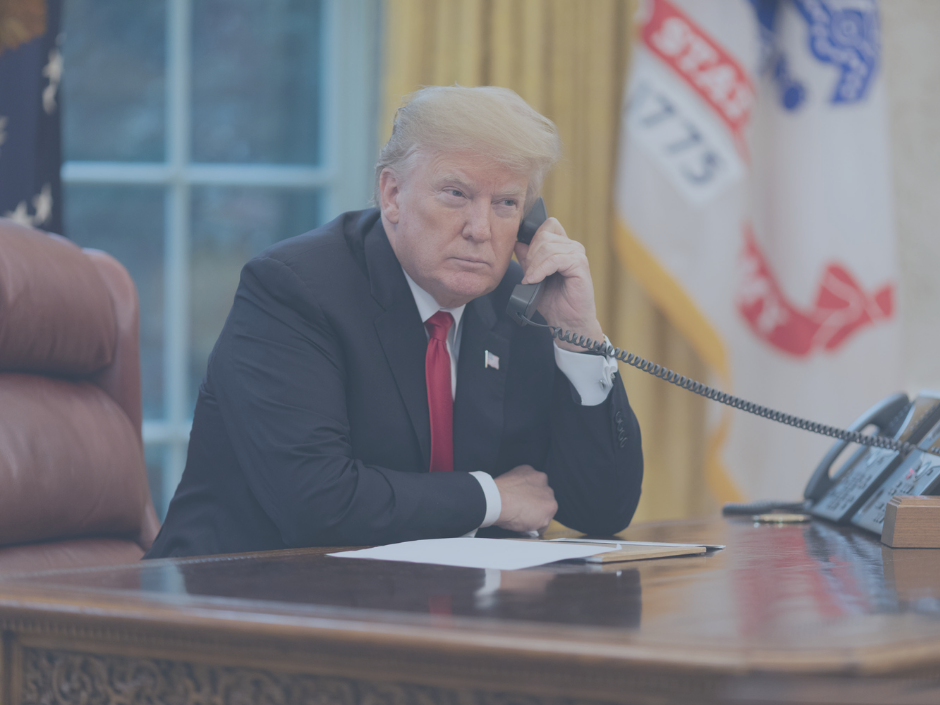
At 12:01 a.m. Tuesday, the day that presidential records from Donald Trump’s first administration become eligible for public access under the Presidential Records Act (PRA), American Oversight filed a sweeping set of Freedom of Information Act (FOIA) requests seeking presidential records that could provide additional details on corruption, conflicts of interest, and abuses of power during Trump’s first term — one of the most opaque and controversial presidencies in modern history.
The requests, submitted to the National Archives and Records Administration (NARA), seek presidential records from 2017 to 2021, including communications involving senior Trump White House officials and external communications by President Trump himself.
Chioma Chukwu, Executive Director of American Oversight:
“The Presidential Records Act exists for a simple reason: the public has a right to know how presidential power was exercised. We sought White House records from Trump’s first term the moment they became legally available because transparency cannot depend on the goodwill of any former president or his allies.
The harm communities across the country are experiencing today as a result of the administration’s policies did not happen in isolation. Many of the same figures now driving this administration refined their playbook during Trump’s first term, learning how to disguise intent, fast-track harmful policies, and evade accountability. Those choices devastated communities then — and their consequences are unfolding again now.
The records we seek are vital to understanding who made decisions, how power was exercised behind closed doors, and what was planned. Preserving and releasing them is essential to real oversight, meaningful accountability, and a public record that allows the country to understand what happened and respond accordingly. Anything less than full, independent compliance with the law undermines accountability and public trust.”
Our FOIA requests seek a wide range of presidential records, including communications by senior leadership from Trump’s first term — Stephen Miller, Dan Scavino, Jared Kushner, Brooke Rollins, and Ivanka Trump — many of whom also have senior roles in his current administration. They also seek text messages and other communications between President Trump and individuals outside the government. The requests could illuminate potential conflicts of interest, improper influence, and the extent to which official government business was conducted outside formal channels.
The records sought could also shed light on some of the most consequential controversies of Trump’s first term, including the development of the family separation policy at the southern border, interactions with foreign governments, and efforts to politicize the Department of Justice to serve the president’s personal and political interests. Those and other records remain essential to understanding how presidential power was exercised at the time — and provide additional context for actions in his second term.
Last week, we called on Deputy Attorney General Todd Blanche to step aside from any role overseeing access to Trump’s first-term presidential records, citing Blanche’s prior role as Trump’s criminal defense attorney and his public acknowledgment of a continuing duty of loyalty to the president whose records are now subject to disclosure. We warned that Blanche’s involvement threatens the independence and integrity of the disclosure process required under the Presidential Records Act.
In his role as Trump’s criminal defense attorney, Blanche fought to keep Special Counsel Jack Smith’s report on the Mar-a-Lago classified documents investigation from becoming public, following NARA’s efforts to recover presidential records that should have otherwise been appropriately transferred under the PRA. Blanche later reinforced that position at his confirmation hearing, testifying that, if confirmed as Deputy Attorney General, he would still oppose releasing the report.
Also last week, we filed a coordinated set of FOIA requests across multiple federal agencies seeking transparency into how the Trump administration plans to comply with the PRA as Trump’s first-term records come due for release. Those requests sought records related to agency guidance, legal analysis, staffing, and decision-making about how presidential records will be reviewed, processed, and released — and whether access may be restricted.
Our requests come as the five-year statutory window for public access to Trump’s first-term records reaches its first major milestone. Under the PRA, presidential records belong to the American people and become subject to FOIA after a predetermined period of time, subject to limited, specific, and time-bound restrictions. January 20, 2026, marks the first day the public can seek access to White House records from 2017-2021, documenting Trump’s first presidency.
The PRA was enacted in the wake of the Watergate scandal to ensure that the official records of a presidency belong to the American people and not to any individual officeholder. Historically, administrations of both parties have complied with the law’s disclosure requirements and NARA’s procedures for staged release of records, even when those records proved politically inconvenient.