
Blanche Should Step Aside as President’s Representative When Trump 1.0 Records Become Eligible for Public Release Next Week
As the Presidential Records Act deadline nears, we’re seeking transparency into how first-term records will be released.
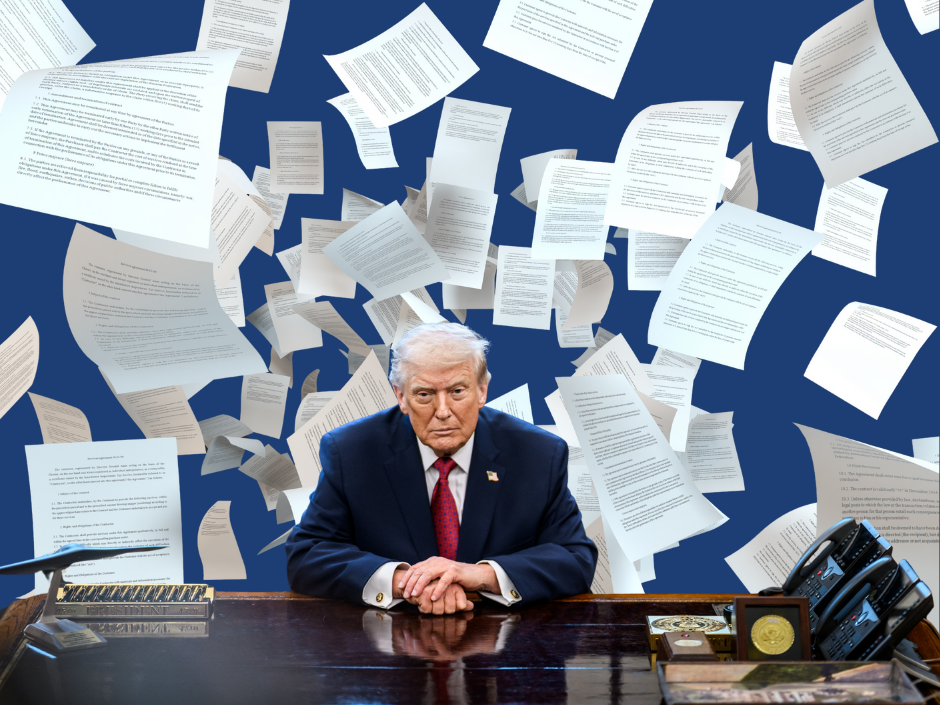
With presidential records from Donald Trump’s first administration set to become subject to public disclosure under the Presidential Records Act (PRA) on January 20, American Oversight sent a letter Thursday calling on Deputy Attorney General Todd Blanche to remove himself from any role overseeing access to those records.
In our letter, we raised serious concerns about the propriety of Blanche serving as President Trump’s designated representative with respect to presidential records from his first administration. Trump designated Blanche for that role in 2023, while Blanche was representing Trump in his criminal cases. During his Senate confirmation hearing last February, Blanche affirmed that his prior role as Trump’s criminal defense attorney means he has a “continuing duty” to Trump, not only of confidentiality, but also of loyalty.
“Presidential records belong to the American people, period,” said Chioma Chukwu, Executive Director of American Oversight. “As records from Trump’s first administration come due, the public is entitled to know what actually happened, who designed the policies that devastated communities across the country, and how those same actors may be shaping the administration today. The Presidential Records Act’s disclosure process only works if decisions to release records are made lawfully and independently. When a senior Justice Department official involved in that process publicly pledges fealty to the president whose records are at issue, the integrity of the process is fundamentally compromised, and accountability under the Presidential Records Act is undermined.”
If past is prologue, Blanche is unlikely to favor robust transparency of presidential records. He previously lobbied against the release of Volume II of the Special Counsel Jack Smith’s classified documents report as Trump’s personal attorney, subsequently testifying at his confirmation hearing that, if confirmed as Deputy Attorney General, he would oppose its release.
Records from Trump’s first administration could shed light on some of the most consequential controversies of that presidency, including the development of the family separation policy at the southern border, the pressure campaign involving Ukraine that led to Trump’s first impeachment, and efforts to politicize the Department of Justice to serve the president’s personal and political interests. Those and other records remain essential to understanding how presidential power was exercised during Trump’s first term — and provide additional context for actions in his second.
Our request comes as the five-year statutory window for public access to Trump’s first-term records reaches its first major milestone. Under the PRA, presidential records belong to the American people and become subject to FOIA after a predetermined period of time. January 20, 2026 marks the first time the public can seek access to White House records from 2017-2021, documenting Trump’s first presidency.
In addition to calling on Blanche to step aside, we filed a coordinated set of FOIA requests across multiple federal agencies to determine how the administration plans to comply with the law governing the release of Trump’s first-term presidential records. The requests to the Department of Justice, the Department of State, and the National Archives and Records Administration (NARA) seek records involving senior officials, including Blanche and Secretary of State Marco Rubio, who also serves as NARA’s Acting Archivist following Trump’s removal of former Archivist Colleen Shogan.
Collectively, the FOIA requests seek internal communications, legal advice and analysis, agency guidance, and staffing information related to how Trump’s first-term presidential records will be reviewed, processed, and released. The requests also seek records addressing any restrictions on access to those materials, including the role of executive privilege and classification reviews.
The PRA was enacted in the wake of the Watergate scandal to ensure that the official records of a presidency belong to the American people and not to any individual officeholder. Historically, administrations of both parties have complied with the law’s disclosure requirements and NARA’s procedures for staged release of records, even when those records proved politically inconvenient.