American Oversight Slams Trump’s Attempted Evasion of Presidential Records Act
Apr 02, 2026
Trump is trying to ignore a decades-old law — but we’re fighting back.
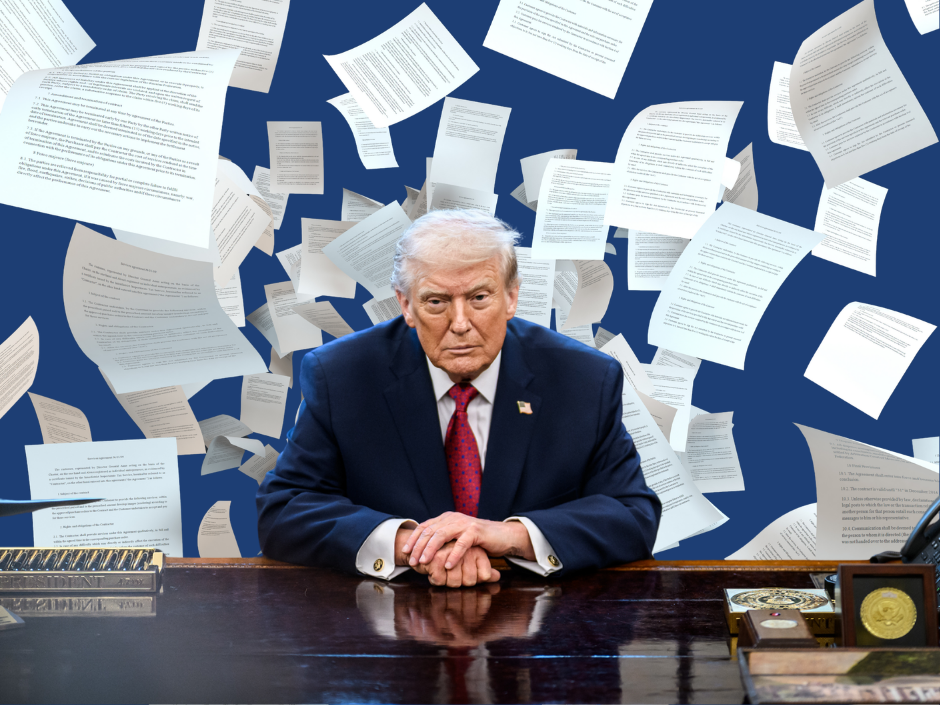
In April 2026, the Trump administration declared the Presidential Records Act unconstitutional and directed White House staff to ignore some provisions of the transparency law. Important behind-the-scenes records of Trump’s presidency could be permanently lost to history. American Oversight is fighting to keep this from happening — and so far, we’re winning.
The PRA was enacted in 1978 in the wake of the Watergate scandal, when President Richard Nixon tried to destroy some of the records of his actions. The law ensured the preservation and public accessibility of presidential records and established that presidential records are the property of the American people, not the president.
In April 2026, the Department of Justice’s Office of Legal Counsel (OLC), which provides legal advice to the White House, issued a sweeping memorandum that declared the PRA is unconstitutional and that Trump “need not further comply” with its requirements, effectively encouraging the president to violate federal law.
Prior to the memo, no presidential administration — including Trump’s first administration — had challenged the law’s constitutionality in such a manner. As recently as 2025, the Trump administration itself acknowledged in litigation that some White House agencies and offices are subject to the PRA and must comply with its requirements.
Within days of the OLC memo, White House counsel sent an email instructing staff to follow new procedures that seemed to ignore many elements of the PRA.
Legal experts and historians warn that OLC’s interpretation of the PRA could block public access to hundreds of millions of records that could provide additional details on corruption, conflicts of interest, and abuses of power. “Presidential records” are materials that the president or their staff create or receive while conducting their official duties — including memos, notes, emails, text messages, spreadsheets, photos, videos, recordings, and more. They are essential to understand what really happened and how decisions were made. OLC’s interpretation of the PRA could block access to more than 700 million White House emails alone, which would make it incredibly challenging to hold the administration accountable for any of its actions.
Presidential records also help journalists, historians, and members of the public learn lessons from American history. For example, historians have studied the meeting notes during the Cuban Missile Crisis and the lead-up to the Iraq war to gain valuable insights. If records like these aren’t preserved, we lose important information about how one of the most powerful offices in the world functions and makes decisions.
The effort to ignore the PRA is part of a broader pattern of secrecy, obstruction, and disregard for legal obligations. Despite repeated claims of ushering in “the most transparent administration in history,” the Trump administration has failed to release essential information to the public. Records of lethal immigration enforcement operations have surfaced only after litigation forced them into the open. The administration has sought to bury former Special Counsel Jack Smith’s report on classified documents. And records related to Jeffrey Epstein remain only partially released despite clear legal mandates.
In April 2026, American Oversight and the American Historical Association filed a lawsuit challenging the OLC memo. Days later, we filed a motion seeking immediate court action to block the Trump administration from disregarding the PRA and to prevent the destruction or loss of presidential records.
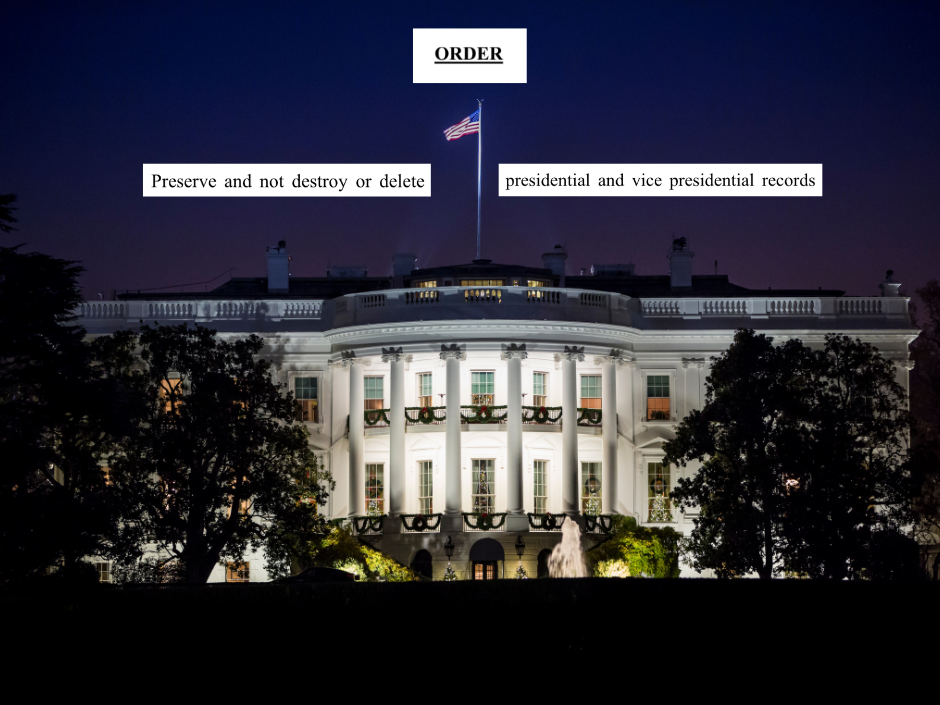
In May, the U.S. District Court for the District of Columbia granted our motion and issued an emergency order that enjoined the White House Office, the National Security Council, the U.S. DOGE Service, and all advisers to the president to comply in full with the PRA. The order specified that compliance includes preserving all presidential and vice presidential records as defined by the PRA, refraining from creating or sending any presidential or vice presidential records via text or ephemeral messaging accounts without copying an official account to preserve the records, and maintaining records retention policies that are in full compliance with the PRA.
The government plans to appeal this order.
Before the Trump administration announced its intent to ignore the PRA, American Oversight had requested a wide range of presidential records. The PRA does not make records eligible for public release until five years after the end of a presidential term. That means communications by senior leadership from Trump’s first term — including Stephen Miller, Jared Kushner, and Ivanka Trump — may now be eligible for release. Some also have senior roles in Trump’s current administration, and access to their records could show potential conflicts of interest, improper influence, and the extent to which official government business was conducted outside formal channels.
The records could also shed light on some of the most consequential controversies of Trump’s first term, including the development of the family separation policy at the southern border, interactions with foreign governments like Ukraine, and efforts to politicize the Department of Justice to serve the president’s personal and political interests. Those and other records remain essential to understanding how Trump is exercising presidential power.