
American Oversight Seeks Hatch Act Investigation After Records Reveal Noem’s Apparent Use of DHS Resources for Political Purposes
Thursday, American Oversight submitted a complaint to the U.S. Office of Special Counsel (OSC) requesting an investigation into whether former Homeland Security Secretary Kristi Noem and members of her staff violated the Hatch Act. The complaint alleges that Noem and her staff used taxpayer-funded travel to attend a partisan Republican Governors Association (RGA) event and […]
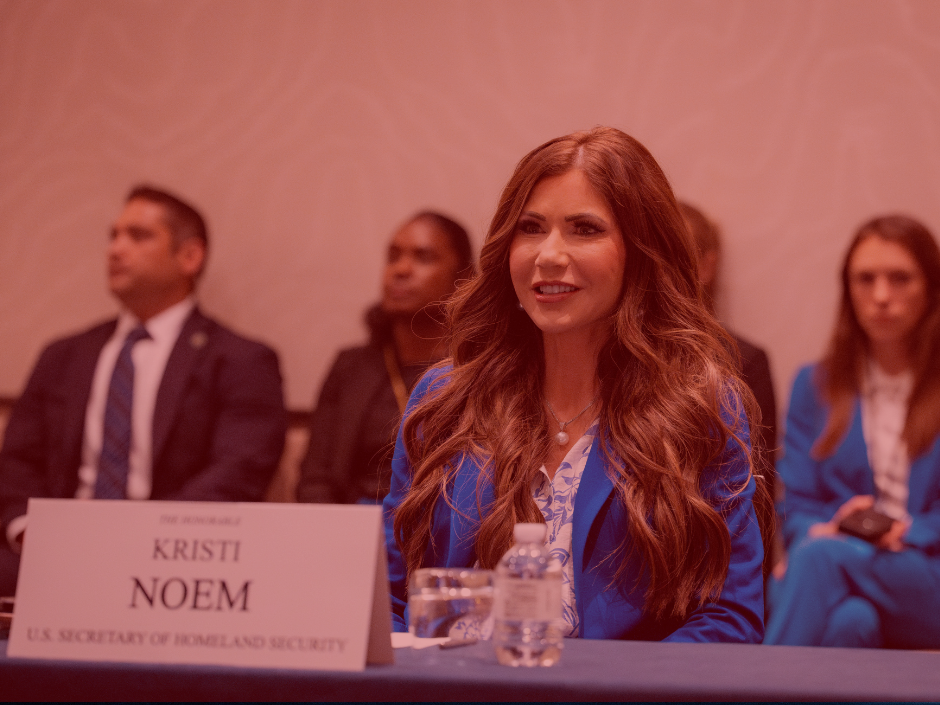
Thursday, American Oversight submitted a complaint to the U.S. Office of Special Counsel (OSC) requesting an investigation into whether former Homeland Security Secretary Kristi Noem and members of her staff violated the Hatch Act. The complaint alleges that Noem and her staff used taxpayer-funded travel to attend a partisan Republican Governors Association (RGA) event and used official Department of Homeland Security (DHS) communication channels to promote partisan political activities. Noem now serves in the Trump administration as Special Envoy for the Shield of the Americas, a newly created role focused on hemispheric security initiatives.
The complaint is based on records we obtained through the Freedom of Information Act (FOIA), which indicate that Noem and DHS staff traveled to Nashville, Tennessee, in June 2025 to attend an RGA conference — a partisan political organization dedicated to electing Republican governors. According to the records, attendance at the RGA event appears to have been the primary purpose of the trip. We are requesting that OSC investigate whether taxpayer-funded travel and other government resources were improperly used for political activity and whether any required reimbursements were made.
The complaint also asks OSC to investigate DHS’s use of its official Flickr account to publicize Noem’s attendance at the RGA conference and other partisan political events, including the Mackinac Republican Leadership Conference. Federal guidance prohibits agencies from using official social media accounts to promote partisan political activities.
“Public resources exist to serve the public — full stop. They are not a vehicle for subsidizing partisan activity, promoting political allies, or elevating the personal political brand of government officials,” said our Executive Director Chioma Chukwu. “Americans should not be left to question whether their tax dollars are being used to underwrite partisan events or whether official government channels were used to amplify them. The public deserves a full accounting of how these resources were used and whether federal law was violated.”
During her tenure at DHS, Noem drew bipartisan scrutiny from lawmakers over her use of DHS resources for political self-promotion. During her March 2026 Senate testimony just days before she was removed from her DHS post and named Special Envoy for the Shield of the Americas, Sen. John Kennedy pressed Noem over a controversial taxpayer-funded ad campaign that featured her prominently, asking whether “spending $220 million was appropriate” and telling her the ads were “effective in your name recognition.” Reports also noted that the campaign featured Noem on horseback near Mount Rushmore, that DHS bypassed the normal competitive bidding process, and that firms tied to Noem’s political circle received work on the campaign.
Questions about Noem’s use of taxpayer-funded resources extend beyond the advertising campaign. In early 2026, lawmakers also scrutinized DHS plans to acquire a pair of Gulfstream jets for executive travel, a proposal critics characterized as an unnecessary luxury expenditure that appeared designed to support Noem’s travel and public profile. The records we uncovered raise a related concern: that DHS resources may have been used not only to elevate Noem’s own political profile, but also to support partisan political allies and organizations.
The Hatch Act prohibits executive branch employees from using their official authority or influence to affect the outcome of an election and restricts the use of taxpayer-funded resources for partisan political activities. While certain Senate-confirmed officials are permitted to engage in some political activity while serving in office, federal law and OSC guidance require that public resources not be used to subsidize those activities.
We are requesting that OSC investigate whether DHS resources were improperly used to support partisan political activities and whether federal restrictions governing those activities were violated.