
The Plan to Use the Military for Immigration Enforcement
More on a newly obtained DHS memo, the CDC’s public measles reporting, and the Trump admin’s mail-in voting order.
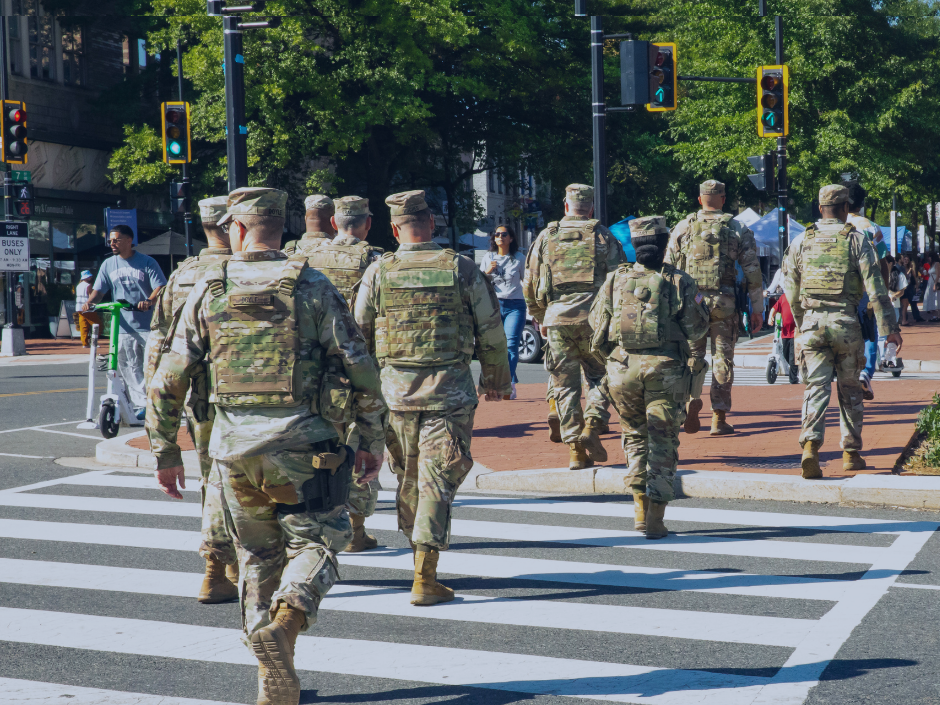
We obtained a memo that the Department of Homeland Security (DHS) sent to all state attorneys general in April 2025, explaining the process the Trump Administration would use to deploy National Guard troops as domestic immigration enforcement officers.
The memo, first reported on by Politico, lays out a plan for the administration to sidestep the Posse Comitatus Act’s restrictions on using the military for civilian law enforcement.
Because the legal theory outlined in the memo is not limited to any specific situation, it raises concerns that the administration might use this tactic more broadly — especially in the 2026 midterm election, where it has been escalating unfounded claims about noncitizen voting.
“With a consequential election approaching, this memo should alarm every American,” said our Executive Director Chioma Chukwu. “The stakes extend well beyond immigration: This memo gives the president a ready-made workaround for using military power at home whenever the administration decides its agenda demands it.”
We’ve sent Freedom of Information Act (FOIA) requests to DHS, ICE, the U.S. Marshals Service, and the Department of Justice for guidance, directives, assessments, legal analyses, communications, and memoranda regarding Election Day deployment plans.
Investigating CDC’s public reporting of measles deaths
This week, we launched an investigation into the Centers for Disease Control and Prevention’s (CDC) apparent manipulation of information surrounding two measles-related deaths, including a newborn baby, in Pennsylvania. These were the first deaths linked to the virus in the state in 35 years.
Multiple media outlets reported that CDC Director Erica Schwartz directed agency staff to exclude the two Pennsylvania deaths from its measles outbreak web page, at the request of Health and Human Services (HHS) Secretary Robert F. Kennedy, Jr. The page is usually updated each Friday. Last week, it was not updated until Sunday, and its dashboard tracking the national death total changed several times over the weekend.
We sent the CDC and HHS FOIA requests for all instructions, guidance, and directives related to the alterations to the CDC’s measles web page. We also requested all email communications among senior HHS and CDC officials — including Kennedy and Schwartz — about measles, the CDC web page, and the deaths in Pennsylvania. Those records could shed light on why the CDC departed from its normal classification practices and changed its public reporting on the deaths.
Our investigation comes amid a nationwide rise in measles cases: As of late August, the CDC had reported 2,903 confirmed measles cases and 37 outbreaks in the U.S. this year. Pennsylvania is home to the largest current outbreak in the country, with more than 500 confirmed cases.
“The administration is playing politics with a rapidly spreading, deadly measles outbreak — and that means playing politics with people’s lives,” said our Executive Director Chioma Chukwu. “Americans deserve accurate, science-based information, not public health guidance that changes to suit one man’s partisan agenda.”
On the records
The threats to free and fair elections in 2026
We’re using public records requests to investigate the Trump administration’s efforts to interfere with elections, including by changing federal voting rules and promoting false claims of election fraud.
- On Thursday, we sent the U.S. Postal Service (USPS) three FOIA requests for officials’ emails, calendar invites, and communications with key Trump administration officials and election denial activists. Those records could shed light on how the USPS is implementing Trump’s executive order targeting mail-in voting, following Sen. Richard Blumenthal’s release of a whistleblower’s disclosure that the process was “secretive, rushed” and “chaotic,” and that there is a “high likelihood” it will disrupt ballot delivery to voters.
- We requested all of the sources and talking points used in a July speech by DHS Secretary Markwayne Mullin, to investigate his unfounded claims that 250,000 noncitizens were registered to vote in California, Pennsylvania, New Jersey, and Nevada. Those records could also shed light on how DHS obtained the states’ voter registration data and how it identified the alleged noncitizens.
- Last week, we sent officials in Wisconsin requests to learn more about the Federal Bureau of Investigations’ (FBI) continued pursuit of baseless claims of fraud in the state’s 2020 election. The FBI has reportedly been contacting election officials in the state — our requests seek to find out who they’ve been speaking to and what they’ve been saying.
American Oversight in the news
- How DHS created a workaround to turn Guard members into immigration officers (Politico)
- Trump administration endangering national security with records law stance: Former archivists (The Hill)
- ‘A perfect tool for abuse.’ Why experts are concerned about ICE’s $17 million electric shock gloves contract (PBS News)
- Senator calls for criminal investigation into RFK Jr.’s lies to Congress over vaccines (Salon)
- Watchdog demands federal records over disputed CDC measles death data (Tampa Free Press)
Other stories we’re following
- Whistleblower’s lawyer warns USPS plan for Trump’s order could keep ballots from voters (NPR)
- ICE skipped basic checks in rush for recruits, whistleblower says (New York Times)
- Mullin says DHS could deploy to polling sites for ‘specific’ threats, arrests (Politico)
- Trump moves to strip tax exemption from schools that aid minority students (New York Times)
- The IRS slashed its staff. One result? More taxes going uncollected (NPR)