
What We Still Need to Know About Bondi’s Handling of the Epstein Files
Pam Bondi oversaw the Justice Department’s review of the Epstein files. She’s now scheduled to be interviewed by Congress.
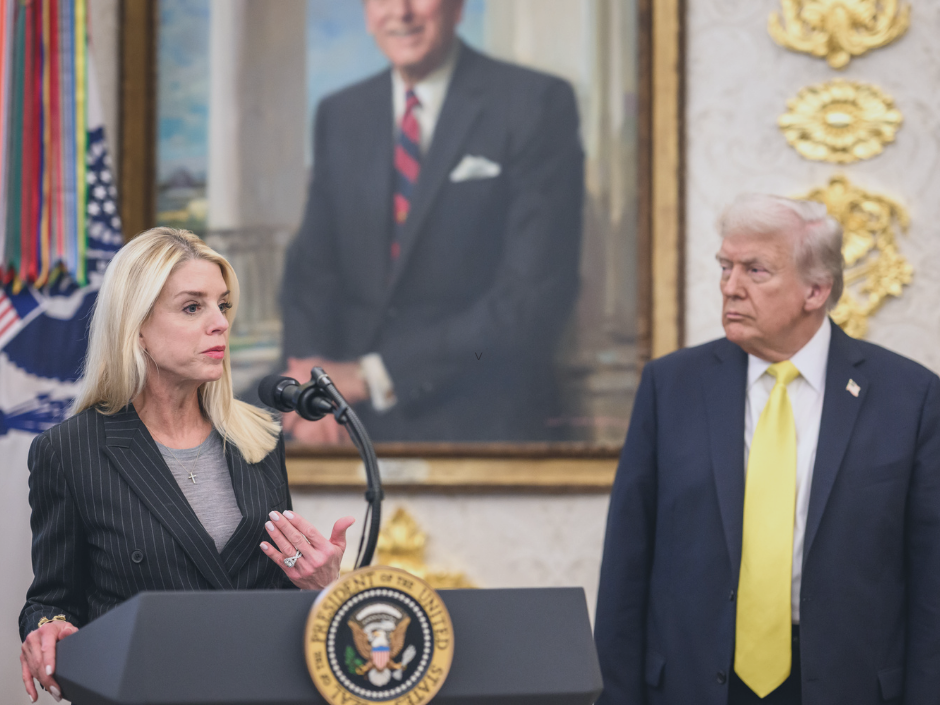
On May 29, former Attorney General Pam Bondi is scheduled to appear before the House Committee on Oversight and Government Reform. Members of Congress should have the opportunity to ask her questions about her handling of the Department of Justice’s (DOJ’s) review of the investigative files related to convicted sex offender Jeffrey Epstein.
Federal Bureau of Investigation (FBI) staff were reportedly instructed to flag mentions of Trump in the trove of documents. Lawmakers from both parties want to know more, because we now know that Trump’s name was in the files more than 1,000 times.
Here’s what you need to know about Bondi’s testimony, the Epstein files, and how American Oversight is also fighting for answers.
What is Pam Bondi’s track record on the Epstein files?
Initially, Bondi pledged to provide transparency and answers about Jeffrey Epstein. In February 2025, soon after she was confirmed as attorney general, Bondi promised people that “you’re going to see some Epstein information released” and claimed that a list of Epstein’s clients was “sitting on my desk right now.” That same month, Bondi further pledged more transparency as she claimed to have discovered a “truckload” of files and stated that “everything is going to come out to the public.”
But by the summer of 2025, Bondi and DOJ backtracked, and seemingly prioritized protecting Trump. The Wall Street Journal reported that Bondi told Trump in May 2025 that his name appeared in the files. On July 15, DOJ announced it would not release more Epstein files, and that the client list Bondi said was sitting on her desk did not exist. Just days later, ranking member of the Senate Judiciary Committee Dick Durbin published a letter claiming that FBI agents reviewing the Epstein files were told to “flag” mentions of Trump. When Bondi testified to the Senate Judiciary Committee that October, she refused to say who ordered staff to flag mentions of Trump. Documents released by DOJ this year indicate that FBI agents did receive these instructions.
In November 2025, Congress passed and Trump signed into law the Epstein Files Transparency Act, which required DOJ to release its investigative files on Epstein to the public by December 19, 2025. DOJ failed to meet this deadline, but in January 2026 it released more than three million pages that contained more than 1,000 mentions of Donald Trump. However, later reporting and subsequent releases revealed that documents with accusations against Trump had been withheld.
In February 2026 testimony, Bondi again refused to answer questions from members of Congress about how the investigation was conducted. In March 2026, the House Oversight Committee subpoenaed Bondi to answer members’ outstanding questions under oath, but her deposition was delayed after Trump removed Bondi from her role as attorney general in April. The committee majority confirmed Bondi would appear before the committee on May 29 after some members filed a motion to hold Bondi in contempt.
What are we looking for in Bondi’s May 29 testimony?
It isn’t clear whether there will be another opportunity to ask Bondi questions about DOJ’s review of the Epstein files. And there are still questions we need answered: We need to know what instructions staff received when reviewing the files and why those instructions were given. That includes if Bondi told staff to flag mentions of Trump or if she tried in any other way to shield the president or others from scrutiny — especially since the Epstein Files Transparency Act prohibits DOJ from shielding Trump or anyone else.
American Oversight has been fighting for nearly a year to get the government to release the instructions and training materials given to DOJ and FBI staff during their review of the Epstein files. We submitted FOIA requests in July 2025 that could show what instructions Bondi and FBI Director Kash Patel received and what they told agents to do, including if they were told to flag mentions of Trump. We also asked for any dissent that staff may have expressed about the review. When the administration failed to produce the records, we sued.
In April 2026, the FBI produced just 90 pages of heavily redacted emails in response to our requests, along with one set of March 2025 instructions apparently given to certain staff processing the Epstein files. The instructions include basic technical information as well as guidance on what information should be redacted, such as victims’ personal identifying information and individuals’ credit card and passport numbers. Seeing this small slice of instructions actually adds to the confusion about what other guidance staff might have received, because much more information was redacted and otherwise withheld than these March instructions would suggest.
DOJ has not yet released any records in response to our lawsuit. Earlier this month, we had a court hearing to address DOJ’s refusal to agree to a schedule for releasing documents, and the Court ordered DOJ and FBI to process at least 350 pages per month, with rolling production by the end of each month — starting on May 30 — of non-exempt records responsive to our requests.
Oversight Committee members could press Bondi to answer questions about the review. They have been successful before: The committee’s previous subpoenas are how the public learned about the birthday book drawing Trump reportedly made for Epstein, Epstein’s email stating that Trump “knew about the girls,” and that Epstein claimed Trump was the “dog that hasn’t barked.”
Americans deserve to know if the agency tasked with upholding the rule of law and protecting their safety was instead prioritizing the president’s reputation.