
ICE 287(g) Records Show How Agency Cut Training by 75-80 Percent for Local Police Making Immigration Arrests
Emails Show Instruction on Citizenship, Immigration Status, and Removal Charges Was ‘Truncated’ and Real-World Scenarios Removed as ICE Rapidly Expanded Its 287(g) Program
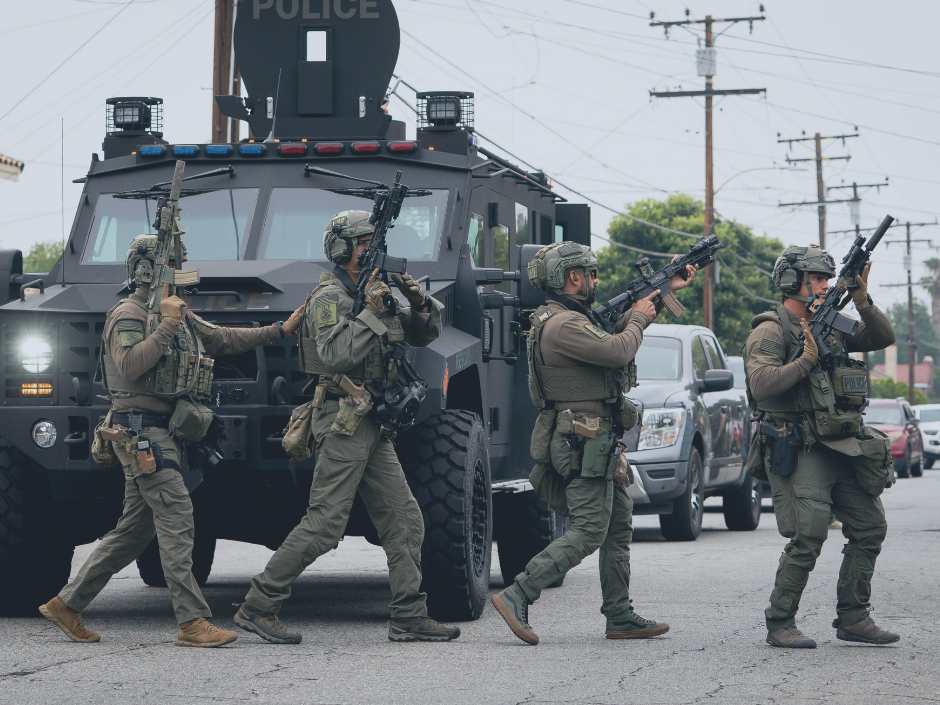
WASHINGTON, D.C. — Yesterday, American Oversight released records obtained through Freedom of Information Act (FOIA) litigation against U.S. Immigration and Customs Enforcement (ICE) that show how the agency cut training for local police officers deputized to make immigration arrests under its 287(g) program by 75-80 percent, from a four-to-five-week course to a single week, scaling back the very instruction officers most need to understand the rights and legal status of the people they encounter in the field.
As reported by The Washington Post, a February 2025 email to Todd Lyons, then acting head of ICE’s Enforcement and Removal Operations, explains that instruction on nationality law, immigrant and nonimmigrant classifications, and removal charges was “truncated” to fit a one-week course, and that scenarios officers might encounter in the field were removed. David Venturella, now ICE’s acting director, was copied on the email and replied: “Thanks.”
The cuts came as the Trump administration revived the 287(g) “task force model,” under which local officers can interrogate, arrest, and charge people suspected of being in the country unlawfully. In the past, task force officers completed a four-week, in-person course at the Federal Law Enforcement Training Centers. The program now only requires a 40-hour online course. Since Trump’s return to office, 287(g) partnerships have grown from 135 active agreements under the Biden administration to more than 2,600 agencies. ICE is now proposing to subsidize liability insurance for deputized officers accused of on-duty misconduct.
“As immigration enforcement expands and families are torn apart, ICE is cutting the training meant to help local officers understand the limits of their power,” said Chioma Chukwu, Executive Director of American Oversight. “These officers can question, arrest, and detain people, but ICE cut their training to just one week. More power should come with more preparation. When officers don’t understand the laws they’re enforcing, people can lose their freedom, be separated from their families, or even lose their lives.”
The email, sent Feb. 20, 2025, responds to Lyons’ “287g training question last night.” It explains that ICE’s jail enforcement model training “consists of 19 training days.” When staff were tasked with creating training for the task force model, they were first instructed to shorten it to two weeks with the understanding that task force officers would not be processing people, cutting most of the processing instruction and adding field scenarios. Then, the email states, “We were then told, the training had to be 1 week in length and to remove scenarios. We pulled the scenarios and then truncated nationality law, immigrant and nonimmigrant classifications and removal charges to achieve the 1 week length for training.”
The email also makes clear that the length of the course was a choice: “We can provide however long of a course they want, but bringing down or up the amount of material in the training would dictate the length of the course.” It floats a “self taught” option in which “the student or its leadership would dictate how long they would have to finish the course.” The records do not say who ordered the cut to one week or why.
“The material ICE cut was seemingly designed to help officers understand whether they have a lawful basis to act against someone. That means understanding whether someone is a U.S. citizen, what their immigration status is, and whether there are legal grounds to seek their removal,” Chukwu continued. “ICE intentionally scaled back that instruction just as it was racing to deputize thousands of local officers. Officers who haven’t been trained to answer those basic questions have no business making immigration arrests.”
In addition to training cuts for local law enforcement, ICE also cut training for its own new officers, shortening its 72-day academy program to 42 days, before reverting to the longer course earlier this year following intense criticism. ICE’s own internal watchdog has long warned that the agency is unable to adequately train and supervise local officers to carry out complex immigration laws. There is no indication that the shortened 287(g) task force training has been similarly restored.
As ICE hands immigration powers to thousands of local officers, the public deserves to know who ordered these training cuts, what those officers are being taught today, and how many people have been wrongly stopped or arrested by officers who were not adequately trained.