
American Oversight Warns DOJ and National Archives That Destruction of Jack Smith Report Would Violate Federal Law
Our demand letter responds to Trump's unprecedented request that the special counsel’s report be destroyed.
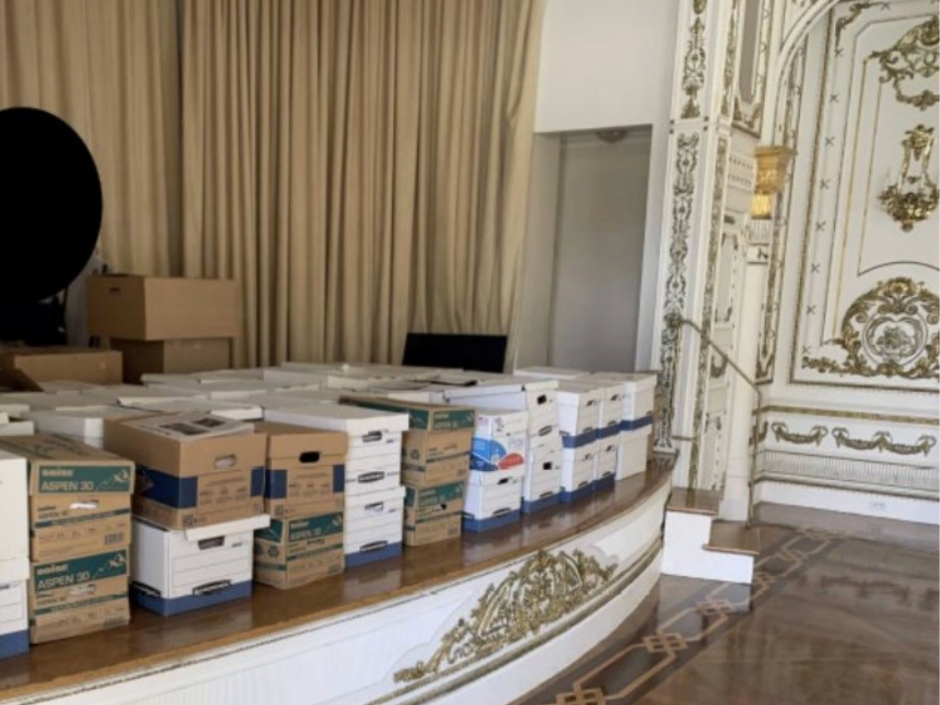
Thursday, American Oversight sent a demand letter to Attorney General Pam Bondi and senior officials at the National Archives and Records Administration (NARA) warning that any effort to destroy Volume II of Special Counsel Jack Smith’s final report would violate the Federal Records Act (FRA). The letter comes amid escalating legal efforts by President Trump and his co-conspirators, Waltine Nauta and Carlos De Oliveira, to convince Judge Aileen Cannon to enjoin release of the report permanently and to require destruction of all copies.
Our letter makes it clear that Volume II of the Special Counsel’s report, which investigated President Trump’s alleged mishandling of national security documents, constitutes a federal record under the FRA and is subject to mandatory preservation obligations. We ask that the Department of Justice (DOJ) and NARA take appropriate action to prevent destruction of the report, regardless of any pending motions before Judge Cannon.
“The destruction of Volume II of Special Counsel Jack Smith’s report would be an extraordinary and unlawful erasure of a federal record documenting an investigation of profound public importance. The FRA imposes a clear and nondiscretionary duty on the DOJ and NARA to preserve federal records, regardless of pressure from the president and his co-conspirators or their pending motions before a court,” said Chioma Chukwu, Executive Director of American Oversight. “Special Counsel Smith testified under oath in Congress that the report documents powerful evidence that President Trump willfully retained highly classified information after leaving office, putting our national security at risk. Destroying the report would shield the president from public scrutiny and undermine the rule of law itself. Federal records belong to the American people, not to any president or administration seeking to bury the truth. If the DOJ or NARA permits the destruction of this report, they will be violating federal law.”
The demand letter follows a series of extraordinary developments in the case surrounding efforts to release Volume II of Special Counsel Smith’s report to the public.
On Feb. 9, we, along with the press freedom watchdog Knight First Amendment Institute, filed an appeal with the Court of Appeals for the Eleventh Circuit seeking to overturn Judge Cannon’s order preventing our participation in the criminal proceedings to seek the release of the report, which itself challenged the continued enforcement of her Jan. 21, 2025, gag order barring the DOJ’s public release — even to Congress — of the report.
The same week, following separate motions filed last month by Trump and his co-conspirators Nauta and De Oliveira asking that Judge Cannon prohibit the report’s release and require its permanent destruction, we, along with Knight First Amendment Institute, filed a joint expedited motion to intervene, which seeks to prevent Cannon from ruling on these attacks on transparency and asks that the case be paused while the appeals courts make a decision.
The appeal challenged Judge Cannon’s late-December order denying motions by Knight First Amendment Institute and us to intervene, rejecting arguments that transparency and public access interests warrant our participation in a matter of significant public importance. Cannon declined to order the immediate release of the report, and instead granted President Trump and his co-conspirators a 60-day window to challenge disclosure and keep the report under seal during any appeal process — effectively providing the president with a roadmap for keeping the report hidden indefinitely.
Additionally, on Feb. 13, we, along with the Knight First Amendment Institute, filed a mandamus action with the Eleventh Circuit asking the court to stay proceedings in Judge Cannon’s court while the Eleventh Circuit decides their appeal. And yesterday, we asked the Eleventh Circuit to expedite consideration of the mandamus action, after Trump and his co-conspirators filed a document on Tuesday with Judge Cannon asking her to rule on their motions to destroy the report or prevent its release, even after we had filed our appeal with the Eleventh Circuit.
More than a year ago, on Feb. 10, 2025, we filed a Freedom of Information Act (FOIA) lawsuit and motion for preliminary injunction against the DOJ in the United States District Court for the District of Columbia after the agency failed to respond to our request demanding the release of the report, which would ordinarily be subject to disclosure under FOIA. The district court ultimately denied the motion, citing Judge Cannon’s gag order in dismissing the our suit.
Cannon’s Dec. 2025 decision allowing the gag order to remain in effect for 60 days, so Trump and his co-conspirators could request that it not be released, came just days after Smith spent more than eight hours testifying behind closed doors before the House Judiciary Committee. There, he revealed that his investigation produced “proof beyond a reasonable doubt” that President Trump unlawfully attempted to overturn the 2020 election and that he had uncovered “powerful evidence” that the president willfully retained highly classified documents after leaving office. During a public hearing last month, Smith acknowledged that the DOJ’s interpretation of Cannon’s gag order effectively barred him from testifying publicly about the contents of the report. In response to Cannon’s order, Trump and his co-conspirators filed their respective motions to bar the report’s release permanently and destroy it.
We filed our Sep. 2025 mandamus petition after repeated efforts to force Judge Cannon to lift her order. Although Trump’s appeals in the criminal case were dismissed in Nov. 2024, and the others in early Feb. 2025, Cannon allowed the prohibition of release to remain in effect 60 days beyond her Dec. 2025 order. This move was sparked by the U.S. Court of Appeals for the Eleventh Circuit’s November finding that Cannon’s failure to rule on our motion to vacate the gag order seven months after it was fully briefed constituted an “undue delay.”