
The Trump Administration’s Economic Policy
How Trump’s policies — tariffs, tax breaks, and cuts to government programs — are straining resources for everyday Americans while enriching the ultra wealthy.
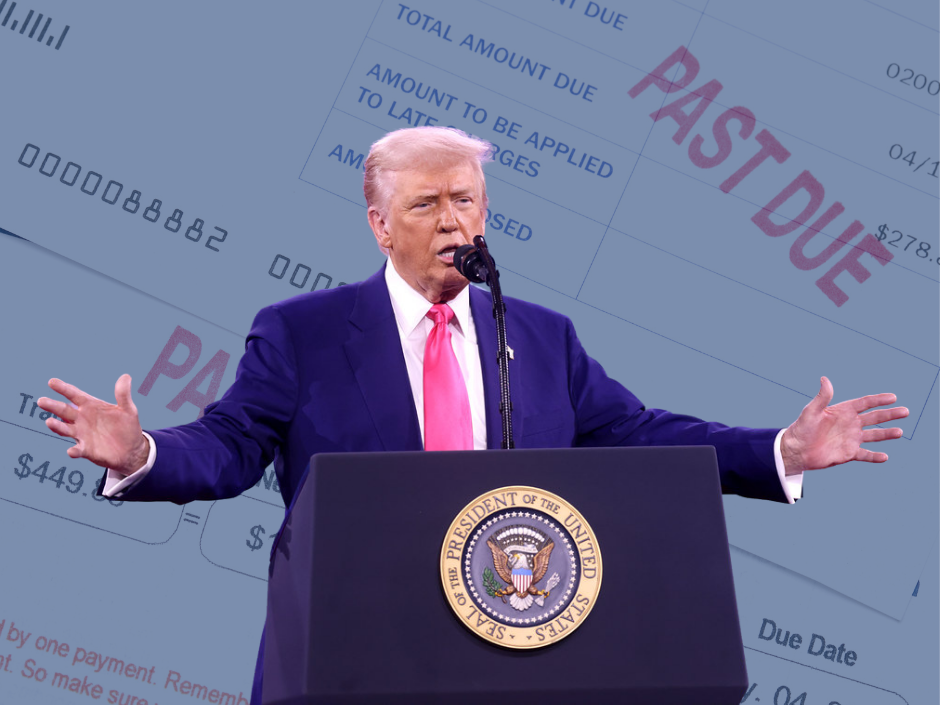
President Trump made economic promises a cornerstone of his 2024 campaign: He talked at length about inflation and high consumer prices, and vowed to bring both under control through tariffs, tax cuts, and deregulation.
In reality, Trump’s economic policies make it more difficult for average Americans to afford food and other essential expenses, while the ultra rich — who are sheltered from the harshest effects of the president’s trade war — receive massive tax cuts.
Here’s a look at the president’s key economic policies and how they are impacting everyday Americans.
Tariffs
In the spring of 2025, Trump imposed hefty worldwide tariffs on imported goods, including those from established U.S. trading partners like China, Mexico, and Canada. The president insists tariffs will generate revenue and jobs in the U.S., but so far the main effect has been an increase in prices, taxes, and inflation at a time when many Americans are already struggling with the costs of living.
While the entire economy is affected by the tariffs, some groups are hurting more than others. The Yale Budget Lab estimates the tariffs will increase the number of Americans living in poverty by 650,000 to 875,000 people, including 375,000 children. Low-income families will have the hardest time affording the price increases, which will cost them about $1,500 per year.
Some businesses are disproportionately impacted by Trump’s tariffs. Small businesses are struggling to absorb price increases, and businesses in industries with particularly high tariffs — especially automakers, steel and aluminum companies, and consumer goods manufacturers — are taking a hit.
Farmers have been one of the groups hardest hit by the tariffs. The main crops in the U.S. are corn and soybeans, and U.S. farmers sell a lot of what they grow to other countries. Some countries — most notably China — have stopped buying these crops to protest Trump’s tariffs. With fewer places to sell their products and higher costs for materials (also driven by the tariffs), farmers are struggling to make ends meet.
The Trump administration announced a one-time $12 billion rescue package for farmers in December 2025. Estimates suggest this is less than a third of what farmers have lost due to the administration’s policies.
While the Supreme Court struck down many of the Trump administration’s tariffs on February 20, 2026, the lasting impact on businesses and farmers will remain. Other tariffs remain in effect, and we expect the Trump administration will use other tactics to try to re-implement the invalidated tariffs.
The tax and spending law (commonly called the “One Big Beautiful Bill Act”)
Trump’s major economic bill, passed in July 2025, included about $4.5 trillion in tax cuts mainly benefiting the rich. It offset some of the costs (about $1.1 trillion) by making cuts to Medicaid, food assistance, student loan aid, and green energy initiatives.
Middle and low income-earning Americans will lose quite a bit because of the law: The cuts to health care, student loans, and the Supplemental Nutrition Assistance Program (SNAP) will end up costing them. Beginning in 2026, Americans who make less than $51,000 annually are expected to see their after-tax income decrease because of the bill.
At the same time, corporations and high-income Americans stand to gain from the law. The top 10 percent of earners will receive about 80 percent of the benefits.
Establishing DOGE
Trump created the Department of Government Efficiency (DOGE), led by Elon Musk, on his first day back in office. Both Trump and Musk claimed DOGE’s purpose was to “maximize government efficiency” by cutting $2 trillion from the federal budget. By the time DOGE was reportedly disbanded, around November 2025, its own inflated estimates were that it cut about 10 percent of its initial goal. Most of those claimed savings came from slashing staffing, humanitarian aid, and government services.
It is difficult to estimate how much these cuts will ultimately cost people given their wide-reaching impact. For the 200,000 federal workers who lost their jobs, the farmers who used to sell their crops to USAID, and the people who were not able to access the grants that support their businesses, the financial costs may be clear. But many others will face less direct costs because of these cuts: Flights cancelled due to a lack of air traffic controllers, loss of health care because the Department of Veterans Affairs no longer has a doctor, or the unexpected costs of illness because of fewer food inspectors and pandemic trackers.
Why This Matters
Overall, Donald Trump’s economic policies are enriching the wealthy, including Trump and his friends, at the expense of everyday Americans.
Trump’s net worth grows by an estimated $3 billion each year he is president, with his income including lawsuit settlements, private business ventures, and financial deals with businesses and foreign governments. Those estimates could even be low — it’s difficult to confidently say exactly how much Trump has pocketed as president because he refuses to release full details about his profits.
The wealthy benefitted dramatically from the new tax law, and there are reports that Trump has tried to shield his allies from the effects of his tariffs. Most Americans, however, are paying a price. They are struggling to access social services, afford everyday goods, and secure gainful employment. At the same time, Trump’s budget law introduced new restrictions to government aid services like Medicaid and food assistance, making programs that were designed to support struggling Americans more difficult to access.
What We’re Doing About It
1. Filing public records requests to learn more about these policies and their repercussions.
We’ve filed dozens of Freedom of Information Act (FOIA) requests with agencies across the federal government for public records that could shed light on whether the president is using his power to benefit himself and his allies. We have started multiple investigations to learn more about the impacts and implementation of Trump’s economic policies.
Who is benefitting from tariffs?
Several of our public records requests seek information about the Trump administration’s tariffs, including details about the influences behind the policies and records showing whether and how the tariffs benefit the president’s allies. We also filed requests for information about how the tariffs will impact the cost of everyday items, including prescription drugs, for American consumers.
We also sent requests for information about how the tariffs were implemented across federal agencies, including the departments of the Interior, Treasury, Commerce, and Education, the Small Business Administration, and the U.S. Trade Representative.
Are farmers getting any support?
Following reporting indicating the administration “delayed and redacted” the publishing of an annual U.S. agriculture and trade report because officials “disliked what it said” about the nation’s trade deficit, we requested records related to the report and the Trump administration’s analysis.
We also sent requests to the Department of Agriculture (USDA) and the Treasury Department for records concerning a $20 billion economic bailout the Trump administration offered to Argentina in September, amid the U.S. government shutdown and the escalating global trade war. Many U.S. farmers criticized the bailout as proof that Trump’s support for foreign allies was being funded by cuts to the American agriculture sector. The requested records could help the public understand if and how Trump bolstered support for his ideological ally ahead of Argentina’s 2025 elections, and how his tariffs are impacting American farmers.
Are allies being protected from — or even benefitting from — damaging policies?
Some Trump allies may also be benefitting from inside information about the tariffs. Activity surged in the options market just before Trump announced a 90-day pause on tariffs in August, prompting speculation that members of Trump’s inner circle may have known about the decision in advance. We requested records that could provide evidence of insider information influencing stock market activity, including agency officials’ communications about tariffs and the stock market.
We also requested information about the Trump administration’s tariff exemptions, and obtained records that show the Small Business Association (SBA) tried to mitigate the damaging impacts of tariffs on a politically sympathetic weapons manufacturer. The documents raise concerns about whether that company or others operated by the president’s supporters were singled out for favorable treatment under his harsh tariffs.
We sent similar requests to investigate the Trump administration’s potential promotion of Starlink — a satellite telecommunications provider owned by Elon Musk — to nations facing U.S. tariffs, following reports that the State Department pushed countries to adopt Starlink in trade and tariff negotiations.
Other requests we sent to the DOJ, FHFA, and the Federal Reserve seek records that could shed light on the specifics of how the Trump administration has pressured federal agencies to pursue these criminal investigations against the president’s perceived enemies.
What is happening with SNAP?
Trump’s budget bill cut more than $185 billion from the SNAP budget, which will affect more than 40 million people who rely on benefits for food assistance each year. We need to know more about how these cuts will be administered and who they will most impact, so we sent FOIA requests to the agencies that administer the program in Georgia, North Carolina, Ohio, and Louisiana, for their assessments on how Trump’s budget bill will affect costs and operations.
We’re also seeking information about how the Trump administration handled SNAP during the 2025 government shutdown, when the program ran out of funding for the first time in its history, leaving millions of Americans without funds to purchase food. During the shutdown, the USDA website warned food retailers not to offer discounts to customers paying with SNAP. We requested records related to these benefit restrictions, including for details about how USDA communicated with food retailers during the shutdown. We also requested USDA’s related policy documents, which could show whether the agency complied with official Trump administration policies.
Additionally, we’re investigating misleading claims that Agriculture Secretary Brooke Rollins made about SNAP recipients, which may have influenced Trump’s budget bill. The bill previously included a requirement for SNAP recipients to regularly reapply for benefits, which experts and elected officials say would introduce new barriers to support. The administration later backpedaled on the requirement. We asked Rollins and the Agriculture Department to release any data backing the assertions.
Is the administration pressuring officials to make decisions that will benefit Trump?
There are several ways that the administration has pushed for policies that could benefit the president financially. For example, Trump has demanded the Federal Reserve cut interest rates, which would be to his personal benefit but may exacerbate inflation.
In October 2025, Trump asked the Justice Department (DOJ) to give him $230 million in taxpayer money, which he said was to compensate for federal investigations into his conduct during his 2016 presidential campaign and the search for classified documents at his Mar-a-Lago residence. We filed more than a dozen FOIA requests for records that could shed light on how DOJ and other federal agencies responded to the request.
We also filed requests for more information about Trump’s firing of Bureau of Labor Statistics (BLS) Commissioner Erika McEntarfer in July 2025, after the release of a BLS report showing little job market growth after his return to office. We’re seeking the Department of Labor’s and BLS’s communications about McEntarfer’s dismissal and BLS’s report.
How did DOGE operate?
Records we’re seeking could answer questions about DOGE’s creation, authority, and destructive actions at multiple federal agencies. We’ve requested agency records that could shed light on DOGE’s access to Americans’ personal and financial information. Other requests seek USAID officials’ communications with the White House, Congress, Secretary of State Marco Rubio (who in early February was announced as acting director of USAID), and any official designated to USAID’s “DOGE team.”
2. Taking the administration to court when it fails to turn over public records.
The public is entitled to information showing the true impact of Trump’s economic policies. When the administration fails or refuses to release that data, we’re prepared to file suit.
This summer, we sued more than 20 federal agencies for failing to respond to our FOIA requests for information about the DOGE teams that Trump ordered to be installed across the government. The lawsuits seek records identifying the names and titles of individuals on agency DOGE teams, which have been exercising extraordinary and unprecedented authority over agencies’ hiring, firing, contracting, and access to sensitive data systems.
We’re also suing for records that could shed light on the Trump administration’s efforts to strong-arm federal agencies into complying with his policy demands. We sued the Federal Housing Finance Agency (FHFA) in August for failing to release records related to Trump’s unprecedented attempted firing of Federal Reserve Governor Lisa Cook — a move that was based on unfounded theories of fraud and appeared to threaten the central bank’s independence. We’re also seeking records about Trump’s plans to fire U.S. Attorney Erik Siebert for refusing to investigate New York Attorney General Letitia James on similarly unfounded charges.
In December 2025, we sued the DOJ and the Department of Commerce for failing to release documents related to the Trump administration’s pro bono arrangements with nine major law firms. The arrangements could violate multiple federal laws surrounding bribery, extortion, fraud, and racketeering.
We filed suit after Trump issued executive orders targeting several major law firms that supported efforts to hold him accountable during and after his first term. The firms entered into agreements to provide pro bono legal assistance for the administration if the government assured it would not investigate them or restrict their access to federal buildings. We’re suing to uncover records related to these agreements, which could inform the public about how Trump is forcing compliance with his political agenda.