
How Voter Suppression Tactics Prevent Fair Elections
President Trump and his allies are trying to make it harder for Americans to vote. We’re fighting back.
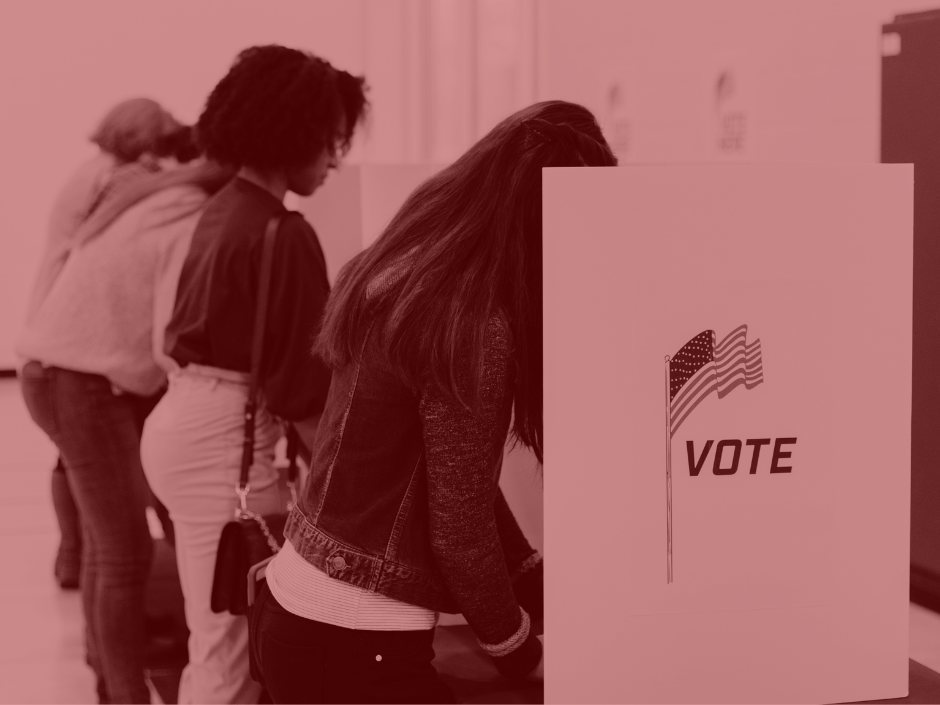
Voter suppression measures make it harder for Americans to participate in elections by restricting how or when they can cast their ballots, imposing burdensome requirements to register for or remain on the voter rolls, and intimidating them away from voting.
While the battle over who should be able to vote is as old as the Constitution, legislation placing new barriers on voting surged at the local, state, and federal levels in the wake of the 2020 election. After 2020, nearly every state considered bills that would restrict ballot access.
These measures disproportionately affect many groups that have been historically marginalized in the U.S., especially people of color, people with disabilities, and people with lower incomes. President Donald Trump and his allies have pushed false theories of widespread voter fraud, which have been repeatedly disproven. These theories often rely on false claims that non-U.S. citizens are voting.
Legislators across the country have passed laws restricting how, when, and where people are allowed to vote. By shrinking the electorate, conservative groups and lawmakers are trying to decide whose voice counts in our electoral system, so they can win more elections and enact their political agendas.
What’s been happening
Limiting how, when, and where you can vote
Between 2021 and 2025, at least 30 states enacted more than 100 restrictive voting laws, including measures that shortened the time voters have to return their ballots, restricted early voting, and banned some voting machines. These laws make it more difficult for many people to vote — especially Black, Latine, and Native American voters, and those who live in rural areas.
Many states have also recently closed some polling locations. Between 2012 and 2022, more than 27,000 polling places were shut down across the country, especially in precincts with more voters of color. This has forced many voters to travel further to cast their ballots, and has left the remaining polling locations overburdened with long lines on Election Day.
Those lines sometimes take several hours to get through, and some recent laws prohibit providing certain assistance to voters. Multiple states have enacted measures that make it a crime to assist voters at polling locations, which can make it harder for those with mobility challenges or who do not speak English to cast their ballots. After the 2020 election, Georgia passed a law banning anyone from handing out water or snacks to people waiting to vote. That measure has been challenged in court, but it could still be implemented during the state’s 2026 election.
Restricting mail-in voting
In 2024, nearly one in three Americans voted by mail. Mail-in voting is trusted and popular among people of all races, ages, and political affiliations, but it is especially prevalent among people over the age of 65, white voters, and Americans living abroad. This method of voting is secure, but Trump and his allies have falsely claimed it is rife with fraud. Several states enacted laws restricting the use of mail-in voting after the 2020 election.
Every state allows some sort of mail-in or absentee voting, but the rules differ: 28 states allow anyone to request a mail-in ballot without giving a reason, and 14 states allow people to vote by mail with a valid excuse. Some states require voters to include a copy of their photo ID when they mail in their ballot, even though millions of eligible voters — disproportionately people of color — lack easy access to official government identification. A dozen states require a witness to sign the ballot envelope, which can be especially burdensome for many older voters, particularly those who live alone, and for many people with disabilities.
Voters can return mail-in ballots using ballot drop boxes in some states, but not in others. Trump and his allies have falsely claimed that voter fraud happens at these drop boxes, which are used to securely collect and store ballots. In reality, drop box-related voter fraud is extremely rare. As of June 2026, ballot drop boxes are largely available in 29 states, explicitly banned in 11 states, and restricted in five states.
Since the 2020 election, several states have enacted laws that stop election workers from counting mail-in ballots if they are received on or after Election Day, even if they are postmarked by that date. Postmarks help determine whether a ballot was cast by the legal deadline, but the U.S. Postal Service clarified in January 2026 that the marks are not always applied as soon as a piece of mail is sent. This means that some mail-in ballots submitted on time could be rejected. In June 2026, the Supreme Court ruled in Watson v. Republican National Committee that the states can count mail-in ballots that are cast by election day but arrive later.
These rules have been changing quickly, creating confusion: In 2025 alone, at least 23 states amended their mail-in voting laws. In recent midterms, some voters’ ballots were rejected because they failed to comply with or misunderstood the new rules.
Again, these changes fall hardest on communities of color. Georgia’s 2021 voter restriction law significantly reduced the number of ballot drop boxes across the state, especially in areas with more Black and Latine voters. In four Georgia counties that have a voting population of about 50 percent people of color, the number of drop boxes went from 107 in the 2020 election to 25 in 2022. Mail-in ballot rejections soared in Texas especially among voters of color after the state introduced its own sweeping voter suppression law in 2021. In Harris County, where nearly half of the population is Hispanic or Latine, nearly 7,000 ballots were rejected in the state’s 2022 primary election, compared to just 135 rejections in its 2018 midterm.
Voter roll purges
Voter list maintenance is the routine deletion of names from lists of registered voters. Regularly updating these lists to reflect when voters have moved or died is necessary, but in recent years supporters of the election denial movement have called for more frequent and extensive purges of the lists using the rationale of alleged fraud.
This weaponization of routine voter list maintenance has already resulted in the wrongful removals of eligible voters. These purges promote false voter fraud claims, which stoke further distrust in our election system. Some states, like Texas, have implemented tip lines to report suspected fraud, which raises serious concerns about voter intimidation.
In the run-up to the 2024 election, conservative activists and election fraud theory promoters led a multi-state exodus from the Electronic Registration Information Center (ERIC), a bipartisan organization used to maintain accurate voter rolls. The mass departure from ERIC was fueled by unfounded right-wing criticism that it did not sufficiently prevent voter fraud, and those false theories further undermined trust in democratic elections. After states left ERIC, many of them used severely flawed alternatives developed by promoters of election fraud theories, like the Election Integrity Network’s EagleAI, to try to maintain their voter rolls. Since these programs are prone to error, their use increases the likelihood that eligible voters could be wrongly flagged and removed from states’ voter rolls altogether. Many of the groups and individuals who pushed for states’ exodus from ERIC were also involved in Trump’s efforts to overturn the 2020 election results.
The Constitution gives the states — not the federal government — the power to control elections. But Trump’s Justice Department (DOJ) has been demanding data about all Americans that would allow it to conduct mass voter roll purges. DOJ has asked at least 47 states to turn over their voter rolls, and has sued more than 28 states for not complying. Eight of those lawsuits have since been dismissed. In March 2026, Oklahoma turned over its voter files as part of a settlement with DOJ.
Intimidating voters
It is illegal to intimidate voters, and multiple federal and state laws explicitly prohibit the government from deploying troops or other federal agents to polling places. Still, Trump has repeatedly suggested that he may deploy the National Guard or Immigration and Customs Enforcement (ICE) officers to polling locations during the 2026 midterms. Trump and his allies have claimed the deployments could be necessary to guard against supposed voting by non-citizens, which is not happening at a level that would impact any election results.
This could have a major chilling effect on the election’s turnout, especially of Black and Latine voters, immigrants, and other voters of color whose communities have often been subject to harassment and intimidation at the hands of armed officers throughout U.S. history. When people are afraid to cast their ballots, their right to vote is compromised.
Trump’s ‘SAVE America Act’
Trump has been pushing for the “The Safeguard American Voter Eligibility” or “SAVE America Act,” a federal bill that would fundamentally reshape how Americans vote by introducing several voter suppression measures nationwide. The act would ban nearly all mail-in voting and require voters to prove their citizenship in person to register to vote, then show photo identification every time they cast a ballot. Its stated goal is to ensure only U.S. citizens are voting in elections, even though research shows this is a non-issue.
The House passed the SAVE America Act in February 2026. It is currently stalled in the Senate, but many states have begun implementing their own voter suppression measures that mirror it.
Why does this matter?
These voter suppression efforts echo America’s shameful history
The U.S. has a long and shameful history of blocking certain people from voting. At its founding, only white male property owners were allowed to vote in most parts of the country. Although the 15th Amendment to the U.S. Constitution granted Black men the right to vote, states designed literacy tests and poll taxes to limit Black suffrage.
Today’s voter suppression efforts follow this same pattern of systemic disenfranchisement by imposing unnecessary barriers to the ballot box that disproportionately harm voters of color, Native Americans, immigrants, seniors, young people, people with disabilities, people with lower incomes, and many other eligible voters. Many eligible voters have had their registrations challenged or been wrongly removed from the lists because of the Trump administration’s unfair voter roll purges. Research shows these measures have lasting impacts: When eligible voters are blocked from the ballot box once, they are far less likely to try to vote in future elections.
Voter suppression stokes distrust and anti-immigrant sentiment
By continuing to promote falsehoods about widespread voter fraud, Trump and his allies are perpetuating the lie that non-citizens are casting ballots to skew election results, which can lead to race-based and anti-immigrant harassment, intimidation, and discrimination.
When it is harder for a specific group to vote, those individuals lose some of their political power, and the needs and opinions of people with fewer barriers to voting are given more weight. This can stoke widespread distrust in the election system by the groups who face these obstacles, who are less likely to see their opinions represented within the system and are more likely to be harassed or intimidated when trying to participate.
This disinformation also sets the stage for Americans to reject future election results, and can undermine faith in the democratic process for people who believe the false theories that ineligible voters are participating in our elections. And it makes election officials’ jobs more difficult and less safe: Election workers have reported experiencing violent threats and harassment at their jobs, including by supporters of disproven election fraud theories.
The Trump administration is pushing for these changes to consolidate power
Trump has blatantly used his office to push for national election administration changes that would benefit his personal and political interests. In February 2026, he said that Republicans would “never lose” an election “for 50 years” if Congress passed the SAVE America Act.
He has replaced many key federal election administration officials with people who are likely to support his agenda because they previously advanced false claims that he won the 2020 election. And in March 2025, Trump issued an executive order exerting sweeping power to overhaul and take control of U.S. election administration.
That order, which has been blocked by multiple federal courts, would have introduced new restrictive voting rules including voter identification mandates and limits on mail-in ballots, and given the Department of Government Efficiency unprecedented access to voters’ personal data. Since the order has been blocked, Trump and his allies have continued to search for and promote other ways to accomplish those goals.
In February 2026, Trump called on the Republican Party to “nationalize” and “take over” voting in U.S. elections. The appeal came one week after the Federal Bureau of Investigations raided an election center in Fulton County, Georgia, to investigate baseless claims of 2020 election fraud promoted by Trump and his supporters.
These efforts to take control of elections drives distrust in our electoral system, which can lead fewer voters to participate.
What is American Oversight doing about it?
Filing public records requests to investigate voter suppression efforts
We’ve filed Freedom of Information Act (FOIA) requests and other public records requests for information about who is supporting these voter suppression efforts, how, and what they hope to achieve.
We’re investigating whether the Trump administration is planning to deploy military personnel or immigration enforcement officials to polling places during the 2026 elections. After Trump and other administration officials expressed interest in these potential deployments, we sent FOIA requests to ICE, U.S. Customs and Border Protection, the National Guard Bureau, and the Department of Justice’s Office of Legal Counsel to uncover any related directives, policies, or legal analyses. Those documents could tell us whether the administration plans to deploy troops to intimidate voters in the 2026 elections.
We’re also investigating the administration’s expansion of the Department of Homeland Security’s (DHS’s) SAVE database, which it is using in efforts to verify all voters’ citizenship. We’ve filed multiple requests with the DOJ, ICE, DHS, and other key agencies for communications and directives that could show how officials have responded to and implemented Trump’s demands to integrate personal data about all Americans into SAVE for the purpose of flagging and removing alleged non-citizens on states’ voter rolls.
Obtaining and publishing important public information
We’ve obtained meeting minutes, emails, and other government documents that shed light on efforts to limit voters’ access to local, state, and federal ballot boxes. We’re still seeking key details about how these tactics could play out during the 2026 midterm elections.
Records we’ve obtained have revealed that many voter suppression tactics were crafted and promoted by a national network of Trump supporters and election deniers. Cleta Mitchell is one major figure behind many recent voter suppression efforts. She leads an election denial activist group called the Election Integrity Network (EIN), which mobilizes its members to pressure state and federal election officials to adopt restrictive voting rules based on false theories about election fraud.
Emails show that Mitchell has been involved in efforts to pass strict voting rules, including mail-in ballot bans and new voter identification requirements, across the country. In 2024, Mitchell emailed election officials in multiple states to advocate for measures restricting voting access. In March 2025, a North Carolina-based election denial activist included Mitchell in an email expressing support of a bill that would ban mail-in voting nationally. Mitchell responded, “There are some fixes needed for this bill but it is a big step.”
Records also show that Mitchell and EIN played major roles in the disinformation campaign that led nine states to leave ERIC after the 2020 election. Mitchell promoted severely flawed alternatives that election deniers developed to identify and remove voters they find suspicious from states’ voter rolls. Several states used one of those alternatives, called EagleAI, to file mass voter challenges in 2024. Records show that members of the North Carolina chapter of EIN were “beta-testing” a new version of EagleAI, called ELLY, in early 2026 — furthering concerns that the error-prone program could remove eligible voters from state voter rolls.
Documents we uncovered showed that the administration incorporated all Americans’ drivers license and Social Security data into SAVE — which experts warn could facilitate voter roll purges, fuel election integrity misinformation and disinformation, and dramatically escalate the federal government’s access to sensitive personal data.
Going to court when the government fails to release information
When the Trump administration has failed to respond to our FOIA requests, we’ve filed suit. In October 2025, we teamed up with the Campaign Legal Center to sue the administration for information about its efforts to overhaul SAVE for use as a so-called voter maintenance tool. We also submitted a public comment opposing the SAVE expansion in December 2025.
In March 2026, we sued the administration again, for failing to release records related to the Trump administration’s demands to access every state’s sensitive voter information. That lawsuit seeks information about how DOJ is accessing Americans’ personal information and sharing it with ICE.