
A Guide to the People, Organizations, and Myths Threatening the 2026 Midterms
Why are watchdogs and lawmakers raising alarms about the upcoming midterms? We made a guide to explain.
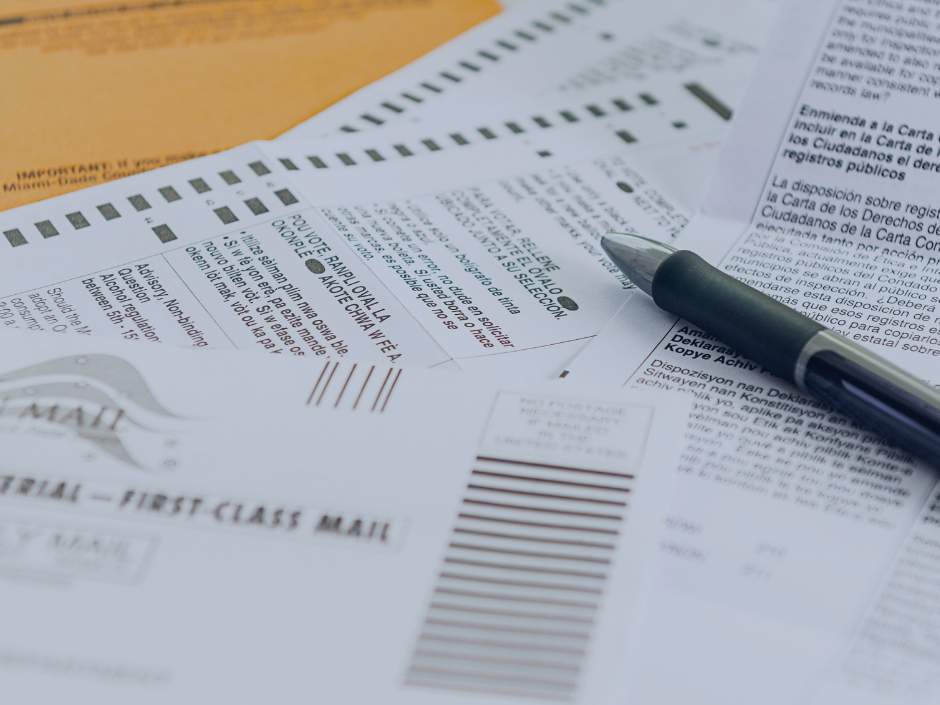
American Oversight created a glossary of recurring news stories and some of the key individuals and organizations that are influencing the upcoming midterm elections. Each topic includes a brief overview, related public records requests we have filed, and links to more in-depth resources.
Organizations
America First Legal Foundation
America First Legal Foundation was founded in 2021 by former officials from the first Trump administration, including current White House senior adviser Stephen Miller. The firm has played a key role in turning election denial from disorganized conspiracy theories into a legal strategy through litigation and demand letters. The group has challenged election administration in states including Minnesota, Pennsylvania, and Arizona. It represented Maricopa County Recorder Justin Heap in his lawsuit for more authority over elections in the Arizona county.
- Requests we filed: Requests related to America First Legal Foundation representing Justin Heap
Election Integrity Network
The Election Integrity Network (EIN) is a voting restrictions advocacy group founded in 2021 that is spearheaded by Cleta Mitchell. The group has chapters in at least 39 states, which it uses to advocate for local policy changes and to train volunteers to monitor democratic elections and spread doubt about their results. In May 2026, the group released a handbook with model policies that would severely limit voting. In at least one instance, a Trump administration official discussed federal efforts to add more data into the SAVE database on an EIN video call, suggesting the close relationship between EIN and the administration.
- Requests we filed: Requests for Heather Honey’s communications with and about EIN; Requests for EIN communications with Trump administration officials
- Resources we published: Inside Election Integrity Network Meetings
True the Vote
True the Vote is an election denial group whose work has included conducting mass voter registration challenges, releasing the conspiracy theorist film 2000 Mules, and coordinating with the Republican Party despite its 501(c)3 status. True the Vote created IV3, an app that enables users to submit voter registration challenges to local election offices. Gregg Phillips — a former Trump official who was in charge of the Office of Response and Recovery at the Federal Emergency Management Agency and made headlines for claiming he was teleported to a Waffle House — was formerly the director of True the Vote.
- Requests we filed: Requests related to True the Vote requesting DOGE voter roll purges
- Resources we published: American Oversight Settles Barry County Lawsuit After Obtaining Records from Sheriff Dar Leaf
Names to know
Cleta Mitchell
Cleta Mitchell is a longtime proponent of voting restrictions who aided Trump in his attempts to remain in power in 2020. She leads the Election Integrity Network and was on the Board of Advisors of the Election Assistance Commission — an independent federal agency with duties including creating voting system guidelines, maintaining a mail voter registration form, and certifying voting equipment — from 2021 to 2023. While in that position, Mitchell reportedly urged Republican donors to coordinate to limit access to voting by mail and on college campuses. Mitchell convened a briefing for election deniers prior to Trump’s July 2026 “election integrity” speech. She reportedly hopes to use the Supreme Court’s Watson ruling to shut down early voting.
- Requests we filed: Requests regarding Cleta Mitchell’s contact with the Trump administration; Requests regarding Arizona lawmakers’ July 2026 Washington, D.C. visit
- Resources we published: In the Documents: Cleta Mitchell’s Emails Criticizing Increased Use of Absentee Voting; Inside Election Integrity Network Meetings
Dallas Woodhouse
North Carolina State Auditor Dave Boliek appointed Dallas Woodhouse, former executive director of the North Carolina Republican Party, as his elections liaison to county boards of elections — a new role created for Woodhouse. He resigned in July 2026 after reporting showed he sent text messages pressuring county board of elections members to restrict early voting sites and hours. Records obtained by American Oversight showed apparent coordination between Woodhouse and North Carolina Republican Party officials — but we are still fighting for missing information.
- Requests we filed: Requests regarding Woodhouse’s closed meeting with county boards of elections; Requests regarding Woodhouse allegedly pressuring officials to restrict early voting; Requests for Woodhouse’s communications with election officials
- Resources we published: New Records Reveal Efforts by North Carolina Auditor’s Office to Sway County Early Voting Decisions
EagleAI, ELLY, and Psephos
EagleAI, ELLY, and Psephos are controversial voter roll purge tools created by or connected to John “Rick” Richards, a close ally of voting-restriction activist Cleta Mitchell with ties to election denial networks. The tools have been promoted and utilized by Mitchell’s Election Integrity Network. Independent reporting and expert analyses have repeatedly warned that tools like these rely on outdated or mismatched datasets, including public records that are not designed to determine voter eligibility. Experts say this limitation can produce “huge numbers of false positives,” which increases the likelihood that eligible voters could be wrongly flagged and removed from voter rolls altogether. Records we obtained show Richards and his son, Rick Richards III, reaching out to election officials in at least five states across the country — Georgia, Missouri, North Carolina, Rhode Island, and Texas — as part of an apparent broader effort to introduce the software nationwide.
- Requests we filed: Requests related to ELLY pitches to lawmakers; Requests related to ELLY trainings in North Carolina; Requests to Florida, Georgia, Missouri, North Carolina, and Texas regarding any relationship with Dr. Rick Richards and EagleAI; Requests regarding DOJ’s relationship with Dr. Rick Richards and EagleAI
- Resources we published: State Officials Meeting with Election-Denier Linked EagleAI Founder on NEW Voter Roll Purge Tools; Prominent Election Deniers’ Ties to ERIC Alternatives and Threats to Voting Rights in 2024
Heather Honey
Heather Honey is an election denial activist who was appointed as the deputy assistant secretary for elections integrity at the Department of Homeland Security (DHS) during Trump’s second administration. Her appointment and remarks have alarmed election officials, who were reportedly “confused and anxious” after she echoed rhetoric long associated with baseless claims of widespread voter fraud during an official DHS meeting. Honey is reportedly working on limiting mail-in voting ahead of the midterms. Our previous investigations have helped shed light on Honey’s extensive involvement in the election denial movement and her outreach to state officials to advance baseless claims about voter fraud.
- Resources we published: American Oversight Sues for Records on Trump-Appointed Election Denier Heather Honey; The Campaign to Dismantle ERIC
Justin Heap
Justin Heap is the county recorder in Maricopa County, Arizona, and he is in charge of early voting and voter registration in the county. He has taken an aggressive approach towards his responsibilities, including attempting to use the Department of Homeland Security’s SAVE system to purge voter rolls and threatening to refer anyone flagged by the system for prosecution.
In March 2026, the Department of Justice (DOJ) subpoenaed records to investigate the county’s 2020 election. Emails we uncovered suggest that Heap met with Arizona’s top federal prosecutor right before DOJ told Maricopa County it would investigate, which raises questions about whether he coordinated with federal officials.
In 2025, Heap — represented by American First Legal Foundation — sued the Maricopa County Board of Supervisors, claiming that the board had taken election oversight responsibilities, money, and IT systems away from him. In July 2026, Heap won more power over the county’s elections as well as independent IT systems. Voting rights advocates warn that Heap will use this power to sow chaos and doubt into the county’s upcoming elections.
- Requests we filed: Requests related to Justin Heap; Requests for Arizona County communications; Requests related to Arizona state Sen. Mark Finchem’s support of Heap; Requests regarding county recorder election changes
- Resources we published: Maricopa County Recorder Justin Heap Discussed Election Records, Litigation with Feds
Kash Patel
Federal Bureau of Investigation (FBI) Director Kash Patel has used his position to make unfounded allegations about interference in the 2020 election, and has devoted FBI resources to investigating the baseless claims. Under Patel’s leadership, the FBI raided election offices in Fulton County, Georgia, and searched the offices of a voter registration organization in Ohio. In July 2026, Patel reportedly assigned 260 FBI analysts to a “priority” investigation into that county’s handling of the 2020 election.
Kurt Olsen
Kurt Olsen was a White House adviser assigned to find evidence to support the baseless conspiracies about the 2020 election. In that role, he reportedly tried to ban Dominion Voting Systems machines — equipment that was used by 40 percent of voters in the 2020 election — by trying to get the Commerce Department to claim the machines’ parts were threats to national security. Olsen was also a key part of instigating the FBI’s investigation into the 2020 election in Fulton County, Georgia. He is now a federal prosecutor in Miami, Florida, where is reportedly working on a case alleging a grand conspiracy against Trump in the 2020 election.
- Requests we filed: Requests related to Kurt Olsen and Mojave Research
- Resources we published: In the Documents: Witnesses for John Eastman’s Disciplinary Trial
Topics in the news
Attacks on election security
The Cybersecurity and Infrastructure Security Agency (CISA) is one of the primary agencies responsible for election security, sharing information about potential risks to voting infrastructure and giving technological support to local and state offices. Chris Krebs, CISA’s director during the first Trump administration, challenged Trump’s false claims about widespread election fraud after the 2020 election.
Since Trump’s return to the White House, his administration has hollowed out the department, raising concerns that the country is missing some of the critical infrastructure needed to prevent election misinformation.
- Requests we filed: Requests related to CISA’s services prior to the 2026 midterms
DOJ criminal investigations and FBI raids of 2020 election materials
The Department of Justice is investigating Georgia and Arizona’s administration of the 2020 election, which were central to President Trump’s false claims of election fraud. In January 2026, Federal Bureau of Investigation (FBI) agents raided the election office in Fulton County, Georgia, taking ballots and other election materials. The FBI’s case was reportedly based on a long report written by an election conspiracy theorist. In March 2026, the FBI went to the Arizona Senate building and took nearly 40 servers and hard drives that held data related to Maricopa County’s partisan audit of the 2020 election. Much of the information taken was attributed to audit-subcontractor Cyber Ninjas. The DOJ is reportedly conducting or considering similar investigations in Wisconsin and Michigan.
- Requests we filed: Requests regarding Fulton County ballot seizure; Requests related to Thomas Albus and election probes; Requests related to DOJ inquiry in Fulton County; Requests related to Wisconsin election FBI probe
- Resources we published: The Arizona Senate’s Partisan Audit of Maricopa County Election Results, In the Documents: Cyber Ninjas’ Communications with Election Deniers; Maricopa County Recorder Justin Heap Discussed Election Records, Litigation with Feds
DOJ poll monitors
The Department of Justice sent poll monitors to New Jersey and California during the states’ November 2025 elections. It has sent or plans to send election monitors to eight states (Arizona, Florida, Massachusetts, Michigan, Minnesota, New Hampshire, Virginia, and Wyoming) to observe their primary elections. It is possible election monitors will be sent to states for the 2026 general midterm election as well. While the federal deployment of poll monitors is not unprecedented, they were previously used to protect historically marginalized people’s right to vote — not to intimidate voters. The move could be part of a larger effort to raise doubt that elections are properly conducted. Recently, members of Congress asked DOJ to provide information about the agency’s plans to use poll monitors.
- Requests we filed: Requests to DOJ regarding poll monitors; Requests regarding DOJ poll monitors in New Jersey and California
DOJ’s voter data lawsuits
The Department of Justice has sued more than 20 states for their voter rolls — and it keeps losing its cases. Many of the DOJ attorneys involved in these suits have previously made or supported election denier claims, including Harmeet K. Dhillon, Christopher Gardner, Megan Frederick, and Joseph Voiland. The lawsuits are part of the administration’s broader push to “clean” voter rolls — efforts that often lead to eligible voters being removed.
- Requests we filed: Requests related to DOJ’s voter roll data lawsuits; Requests related to DOJ election interference
- Resources we published: How Voter Suppression Tactics Prevent Fair Elections
False claims about voting machines
Election machines are a central element in disproven claims that American elections are vulnerable to widespread fraud. Some election deniers claim without evidence that voting machines have been hacked, and some local officials have requested federal investigations into voting machines.
White House adviser Kurt Olsen reportedly tried to ban Dominion Voting Systems machines — equipment that election deniers falsely claimed was part of an election fraud scheme in 2020 — by pressuring the Commerce Department to claim the machines’ parts were threats to national security. David Harvilicz, an election skeptic who is the assistant secretary for cyber, infrastructure, risk and resilience policy at the Department of Homeland Security, has encouraged getting rid of all voting machines.
In September 2026, CNN reported on emails we obtained that show top Trump administration officials met with election denial activists to find ways to change election procedures. Their proposals included strategies to invoke the Commerce Department’s national security authority to force states to abandon voting machines in favor of “hand-marked and hand-counted ballots” ahead of the 2026 midterms.
- Requests we filed: Requests related to David Harvilicz’ role at CISA; Requests related to Cochise County’s request for ODNI to investigate voting machines
- Resources we published: Records: Fringe Election Deniers Leverage White House Access, Enlist Commerce Department to Target Voting Machines
Federal investigations of voting rights organizations
In June 2026, the Federal Bureau of Investigation (FBI) raided the offices of the Ohio Organizing Collaborative, a group that registers people to vote. In April, the Department of Homeland Security (DHS) had requested voter information for dozens of people in Franklin County, Ohio. To investigate if similar probes might happen in other parts of the country, we sent public records requests to counties in Kansas, Mississippi, Ohio, and Texas for county election officials’ communications with the FBI, DHS, the Department of Justice, and Homeland Security Investigations.
- Requests we filed: Requests for communications among election officials and federal agencies
ICE or the National Guard’s potential presence at polling places
Ahead of the 2020 election, Trump claimed he would send the National Guard or Immigration and Customs Enforcement (ICE) agents to monitor polling sites — a move experts warned could intimidate voters and potentially violate federal law. When asked about possible deployments, Trump has not ruled out the possibility. Department of Homeland Sec. Markwayne Mullin and Attorney General Todd Blanche have also speculated about potential deployments, further raising concerns.
- Resources we published: American Oversight Investigating Potential Trump Administration Plans to Deploy Military, ICE at Polling Places
Noncitizen voting myth
President Trump and his allies have pushed the conspiracy theory that non-citizens are casting enough ballots to skew election results. Though there is no evidence of widespread noncitizen voting, federal, state, and local leaders use this falsehood to push for policies that would restrict voting, such as strict voter identification laws; voter roll purge mandates; and measures to undermine the results of elections that they do not win. In July 2026, the Department of Justice threatened criminal action against states that knowingly allow non-citizens to vote in federal elections.
Also in July, Department of Homeland Security Sec. Markwayne Mullin claimed that his department identified 250,000 non-citizens registered to vote in California, Pennsylvania, New Jersey, and Nevada. In Nevada, Mullin’s claim has reportedly already fallen apart. After he said as many as 15,903 non-citizens were registered to vote there, Nevada Secretary of State Frisco Aguilar demanded proof of Mullin’s claim and DHS officials sent the state a much smaller list of 185 names it said it had confirmed were not U.S. citizens. In September, Nevada told the DHS that every one of those 185 voters was a citizen. Later that month, we sued the DHS for records that could show what evidence, if any, Mullin used to make these claims.
- Requests and lawsuits we filed: Requests related to Arizona’s non-citizen voting law; Requests related to crowdsourced reports of non-citizen voting; FOIA lawsuit related to data supporting Sec. Mullin’s claim of 250,000 non-citizen voters
- Resources we published: Voter ID Laws, The Trump Administration’s Citizenship Data System, Anti-Immigrant Rhetoric and Election Denialism
Redistricting
Every 10 years, the United States conducts a census of its population, then reallocates congressional seats and redraws districts in response to the results. But in August 2025, Texas redrew their Congressional maps to make it much easier for Republicans to gain seats in the midterms. That November, the Supreme Court ruled that the map could be used in the 2026 elections. Since then, several more states have redrawn their maps to benefit a particular party.
In the Supreme Court’s April 2026 Louisiana v. Callais decision, the court gutted a provision of the Voting Rights Act that required states with high percentages of people of color to have majority-minority congressional districts, making it likely that some of the new congressional maps will be redrawn to eliminate majority-Black voting districts. This will make the maps unrepresentative of the population and dilute the political power of Black Americans in those districts.
- Requests we filed: Requests for Florida communications regarding redistricting; Requests regarding redistricting in North Carolina; Requests regarding redistricting in Texas
SAVE Act
Trump has been pushing for the “The Safeguard American Voter Eligibility” or “SAVE America Act,” a federal bill that would ban nearly all mail-in voting and require voters to prove their citizenship to register to vote and every time they cast a ballot. Its stated goal is to ensure only U.S. citizens are voting in elections, even though research shows this is a non-issue.
Around 21.3 million people do not have easy access to documents that prove their citizenship. People of color, young adults, seniors, people with disabilities, and people with lower incomes are less likely to have current driver’s licenses than other Americans. Because only a few forms of identification would be accepted under the SAVE Act, it would be more difficult to vote in nearly every state.
Trump has claimed that Republicans will not lose a race for “50 years” if the law passes. The House passed the SAVE America Act in February 2026. It is currently stalled in the Senate, but many states have begun implementing their own voter suppression measures that mirror it.
- Requests we filed: Requests regarding DHS implementation of SAVE Act provisions
- Resources we published: How Voter Suppression Tactics Prevent Fair Elections
Use of Department of Homeland Security funding to push elections requirements for state and local governments
In June 2026, the Trump administration announced new requirements to receive specific Department of Homeland Security grant programs that are purportedly designed to help state and local governments prevent terrorism, protect infrastructure, and prepare for major disasters. To be eligible for this funding, DHS is requiring states to use hand-marked paper ballots, phase out some voting machines, and submit their voter rolls to the SAVE database. States, counties, and cities have sued to challenge DHS’s threatened withholding of grant money.
- Requests we filed: Requests regarding SAVE participation and DHS funding; Requests regarding DHS election investigations
Voter roll purges
Voter list maintenance is the routine and necessary deletion of names from lists of registered voters, but in recent years supporters of the election denial movement have called for more frequent and extensive purges of the lists. This weaponization of voter roll maintenance has already resulted in the wrongful removals of eligible voters. It also promotes false voter fraud claims, which stoke further distrust in our election system.
Even though the Constitution gives the states the power to administer elections, Trump’s Justice Department (DOJ has been demanding data about all Americans that would allow it to conduct mass voter roll purges. DOJ has asked at least 48 states to turn over their voter rolls, and has sued more than 28 states for not complying.
The Trump administration also says it has been rolling out a searchable national data system that can be used by election officials to verify voters’ citizenship. The data system is an expansion of a program operated by the Department of Homeland Security (DHS), called Systematic Alien Verification for Entitlements (SAVE). The system is prone to error and could be used to justify large-scale voter purges.
- Requests we filed: Requests related to FBI and DHS investigations into voter roll data; Requests related to Missouri’s use of SAVE database; Requests related to states’ voter roll purges and DOJ agreements; Requests related to Kansas SAVE purges; Requests regarding the impact of SAVE on voter rolls; Requests regarding federal voter database; Requests regarding North Carolina voter list audit
- Resources we published: The Trump Administration’s Citizenship Data System; How Voter Suppression Tactics Prevent Fair Elections
Vote by mail
Voting by mail is secure and was used by nearly one-third of voters in the 2024 election, but Trump and his allies have falsely claimed voting by mail is rife with fraud. In March 2025, Trump issued an executive order exerting sweeping power to overhaul and take control of U.S. election administration. The order, which has been blocked by multiple federal courts, would have imposed drastic limits on mail-in ballots.
In March 2026, Trump issued another executive order that imposed new restrictions on mail-in ballots, including requiring unique identifiers such as bar codes on ballot envelopes and requiring the U.S. Postal Service (USPS) to create uniform standards for ballots submitted by mail. In June, Postmaster General David Steiner informed a Senate committee that the USPS was considering a rule that would withhold mail-in ballots from states that refuse to give the federal government lists of people who requested to vote by mail or absentee. The USPS issued a rule in August 2026 that included a provision stating that ballots sent out that do not adhere to the design standards or that are sent to people not on mail-in and absentee voting list will not be delivered by the USPS. There is ongoing litigation that will determine if this rule takes effect for the 2026 midterms.
In September 2026, a USPS whistleblower alleged that — despite the court order blocking it — the agency was implementing Trump’s executive order asserting power over voting by mail. The USPS is allegedly creating a database known as the Federal Ballot Mail Portal to check and potentially invalidate some ballots. This could lead to tens of thousands of ballots being erroneously invalidated, according to the whistleblower.
In June 2026, the Supreme Court ruled in Watson v. Republican National Committee that the states can count mail-in ballots that are cast by election day but arrive later. The USPS has also announced it stopped postmarking mail on the same day it is received. This affects voting by mail because the postmarked date can determine if a vote is counted.
States have also enacted restrictions on mail-in voting: In 2025 alone, at least 23 states amended their mail-in voting laws. In recent primary elections, some voters’ ballots were rejected because they failed to comply with or misunderstood the new rules. Attempts to remove ballot drop-off locations and uncertainty about post-mark dates have also led to confusion. These changes fall hardest on communities of color.